Ag-Life

Out of the 22 covered commodities, Nebraska only has base acres under ten commodities. Sixty-five percent of Nebraska’s 15.89 million base acres are allocated to corn and 19 percent to soybeans.

Out of the 22 covered commodities, Nebraska only has base acres under ten commodities. Sixty-five percent of Nebraska’s 15.89 million base acres are allocated to corn and 19 percent to soybeans.

Base acres explained: How they compare to actual planting

The Farm Bill represents an important piece of legislation that, in part, provides commodity price stability through program payments.
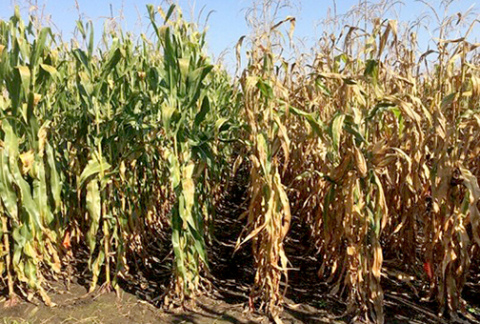
This photo taken by Nebraska Extension Educator Jenny Brhel depicts the shriveled, lightweight corn kernels with minimal fill resulting from a rare combination of stressors during the growing season that created some of the toughest grain-fill conditions for corn in decades.

This photo taken by Nebraska Extension Educator Jenny Brhel depicts the shriveled, lightweight corn kernels with minimal fill resulting from a rare combination of stressors during the growing season that created some of the toughest grain-fill conditions for corn in decades.

The ‘whys’ of disappointing NE corn yields in 2025

This harvest was a difficult one, plagued with breakdowns, slow-going in storm-damaged corn, and disappointing yields in areas of the state.
Outgoing Hamilton County Corn Growers President Mike Bergen is seen here with Dylan Rosier of Missouri Corn at a recent ethanol industry meeting in Missouri.

Outgoing Hamilton County Corn Growers President Mike Bergen is seen here with Dylan Rosier of Missouri Corn at a recent ethanol industry meeting in Missouri.

Bergen reflects on 6 years as Corn Growers president

When Mike Bergen was elected president of the Hamilton County Corn Growers six years ago this month, he had some firm goals in mind as to what he wanted to do while in office.
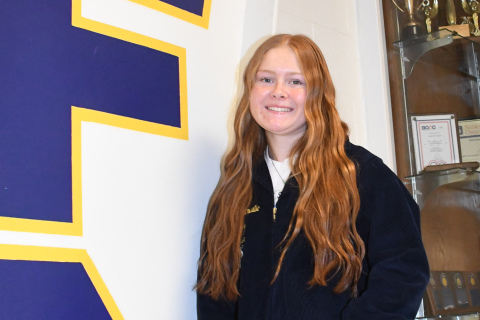
Grand Island native Casey Hoins has been hired as the Nebraska Soil Health Coalition’s first paid staff. As coordinator she will oversee the everyday operations of the organization and, as she puts it, “keep the train on the tracks.”

Grand Island native Casey Hoins has been hired as the Nebraska Soil Health Coalition’s first paid staff. As coordinator she will oversee the everyday operations of the organization and, as she puts it, “keep the train on the tracks.”

Hoins to be first NE Soil Health Coalition coordinator

The new coordinator and first paid staff member of the Nebraska Soil Health Coalition (NSHC) is no stranger to central Nebraska agriculture, nor to Hamilton County for that matter.
Partly cloudy or partly sunny? Indicators point to better farm income in 2025 than the previous year, but economists are still uncertain whether 2026 will continue that trend.

Partly cloudy or partly sunny? Indicators point to better farm income in 2025 than the previous year, but economists are still uncertain whether 2026 will continue that trend.

Forecast mixed for farm income going into 2026

The outlook for farm income in Nebraska remains mixed at the end of 2025. The farm income forecast for the ag sector looks to be up relative to 2024, but not as much as projected back in the spring.
The United States Department of Agriculture’s Economic Research Service (USDA ERS) has forecasted that total costs listed per acre will continue to increase in 2025 and 2026. These increases will put more financial pressure on agricultural producers, especially will current market conditions.

The United States Department of Agriculture’s Economic Research Service (USDA ERS) has forecasted that total costs listed per acre will continue to increase in 2025 and 2026. These increases will put more financial pressure on agricultural producers, especially will current market conditions.

Rising costs squeeze Nebraska agriculture

Nebraska’s farmers and ranchers are facing mounting financial pressures as interest rates, land values, input prices, and equipment costs continue to climb, according to a new analysis released by Nebraska Farm Bureau (NEFB).
A farmer combines the last strip of corn in a field north of Aurora as the sun sets last Tuesday. The corn harvest appears to be nearly complete in Hamilton County.

A farmer combines the last strip of corn in a field north of Aurora as the sun sets last Tuesday. The corn harvest appears to be nearly complete in Hamilton County.

Local growers look back on 2025 crop year

With the 2025 harvest season nearly wrapped up here, Hamilton County farmers are looking back on the season with mixed emotions.
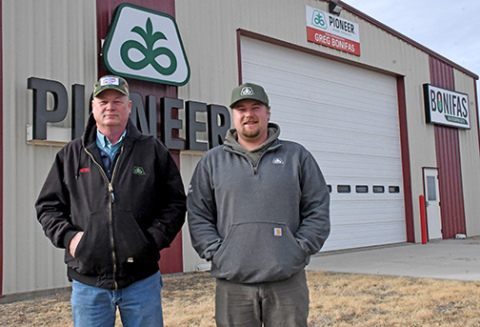
Beck’s Hybrids President Scott Beck (center) prepares to cut the ribbon on the company’s newest seed corn facility, the former Syngenta plant near Phillips, on Friday. With him are his father, Sonny, the company’s CEO, as well as other Beck’s officials and representatives of various community organizations.

Beck’s Hybrids President Scott Beck (center) prepares to cut the ribbon on the company’s newest seed corn facility, the former Syngenta plant near Phillips, on Friday. With him are his father, Sonny, the company’s CEO, as well as other Beck’s officials and representatives of various community organizations.

Beck’s Hybrids cuts ribbon on former Syngenta plant

Beck’s Hybrids, a family-owned Indiana seed company, celebrated its acquisition of the former Syngenta seed corn plant near Phillips with a luncheon and ribbon-cutting ceremony on Friday.
Over the past 20 years, Nebraska Extension policy specialist Brad Lubben has been writing his Policy Report columns for Nebraska Farmer. In this article Lubben notes how much things have changed on the farm policy front — and how much the discussions and debates have stayed the same.

Over the past 20 years, Nebraska Extension policy specialist Brad Lubben has been writing his Policy Report columns for Nebraska Farmer. In this article Lubben notes how much things have changed on the farm policy front — and how much the discussions and debates have stayed the same.

What are the biggest issues facing farmers today?

by Brad LubbenThis column marks the 20-year anniversary of the first Policy Report I wrote for publication in Nebraska Farmer.
Could adopting soil health management systems lead to farmers experiencing more freedom and a rekindling of the traditional yeoman farmer? Julie Snorek says the Kansas and Nebraska farmers she surveyed expressed feeling that way.

Could adopting soil health management systems lead to farmers experiencing more freedom and a rekindling of the traditional yeoman farmer? Julie Snorek says the Kansas and Nebraska farmers she surveyed expressed feeling that way.

Can adopting SHMS give farmers more freedom?

Any ag producer who has investigated regenerative agriculture leading to better overall soil health on the farm knows there are certain challenges and complexities involved in a transition from more traditional farming practices.