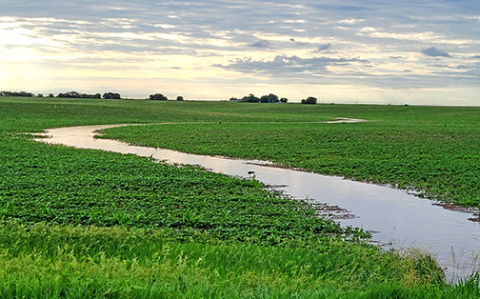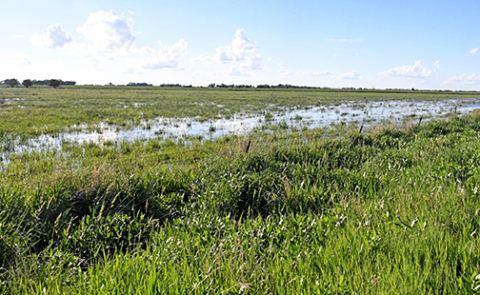
The latest Nebraska Drought Monitor Map shows 99 percent of the state to be abnormally dry, with most of Hamilton County in Severe Drought (D2) and a portion along the Platte River on the northwest side of the county is in D3, Exceptional Drought.
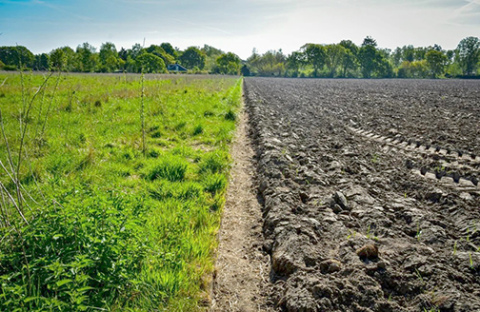
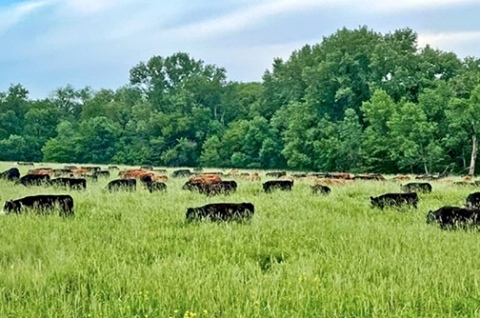
At its core, the growing regenerative ag movement is about restoring what makes Nebraska agriculture possible in the first place: healthy soil. Farmers are turning to cover crops, no-till systems, and diverse crop rotations to combat erosion, improve water infiltration during both droughts and floods, and rebuild soil structure.
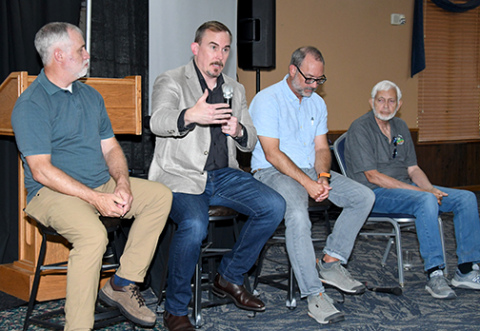
Regional Extension Economist Anastasia Meyer tells an audience in Aurora last week that planning for passing along a farm to the next generation should include discussions about business, estate planning and the farm owner’s sunset years.
An early corn hybrid from 1958 (right) versus a more modern hybrid from 2015 (left). The modern crops retain leaf nitrogen longer, keeping leaves green for continued photosynthesis that allows plants to increase kernel number and size.
Extension Educator Jenny Brhel displays the Allen Moeller Pillar Award she received last week from the Nebraska Soil Health Coalition.
Chad Johnson (left) laughs while chatting with mechanical engineer Cole Oswald while adding parts to a robot. (Photo by Lev Gringauz/Silicon Prairie News)
Pioneer seed representative Greg Bonifas, left, and his son Grant, stand out front of their facility north of Aurora along Highway 14. Bonifas celebrated his 25th anniversary with the company last year and is helping Pioneer celebrate its 100th anniversary in 2026.