
Hampton moves White Blossom street project up

Subhead

Village board makes changes to 1 & 6 Year Street plan
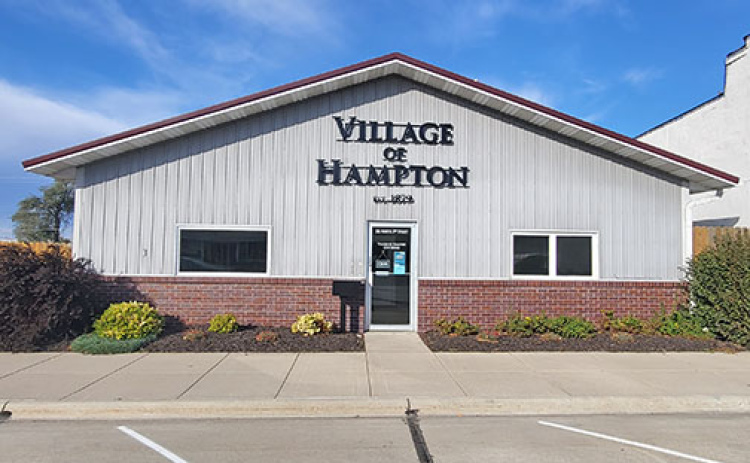
Following a hearing on the village’s state-required 2025 One and Six Year Street Improvement Plan, the Hampton Board of Trustees voted Monday night to remove one project from the one year plan and replace it with another on the other end of town that had previously been one of the six-year projects. 
Board members removed the new 8th Street (part of the Hampton West Subdivision) from the one-year plan because the project has been completed and is open for traffic. The new street connects Highway 34 with the previously dead end West B Street which runs along the north side of the new subdivision. The project replacing 8th Street on the one-year portion of the plan is fixing the intersection of 1st Street and White Blossom Court which is located near the town’s water tower on the north side. Dylan Bamesberger was the first to suggest the change noting “It’s terrible getting in and out of there.” 
Village officials have previously discussed the project with representatives of Miller and Associates Engineering, the village’s engineering firm, but so far they have not seen a plan for the work or a cost estimate. 
Two other projects – one located at an intersection on 3rd Street near the Hawk Learning Center and the other being a block either side of the intersection of H and 2nd streets – remain on the six-year part of the plan. 
The plan, which must be submitted to the state Department of Transportation annually, was approved under Resolution 2024-14. 
The board also approved a contract with Boulder Earth & Pipe, LLC for installation of sewer and water infrastructure related to the TIF previously approved for the CVA white corn cleaning plant project along Highway 34. A representative of CVA was on hand to tell the board that the project was approved as part of the TIF but the cost will exceed the available TIF funds by approximately $21,500. He said CVA was asking the village to enter into the contract with the contractor, as spelled out in the TIF, and that CVA would cover the costs which exceed the TIF funds. The cooperative had previously sent an email to the village promising to do just that. 
The trustees also took action regarding the bonds for the Hampton West Subdivision. With the infrastructure work on the development being nearly complete, the board approved Resolution 2024-13 authorizing the call of the short-term bonds the village had used to fund the project and then gave the nod to Ordinance 408 which authorizes the issuance of up to $995,000 in general obligation various purpose (long-term) bonds for the project. Those bonds must be in place for at least five years before the village can begin paying them down. It is anticipated those bonds will be issued at the end of the month. 
The infrastructure work is progressing on the subdivision and Bernie Straetker of Miller and Associates told the board it could probably take action on the final payment to Mid Nebraska Construction at next month’s meeting. 
The board also gave approval at Monday’s meeting to the payment of three bills incurred by Chris Slocum who lives at 346 G Street when a city water pipe broke near his property causing damages. Board chairman James Parsley estimated the total of the bill at just over $300. 
The trustees also continued to discuss the action they are planning to take to determine whether the building located at 132 North Third Street is structurally sound. Utilities Supt. Chris Friesen was previously appointed as village building inspector and said he has compiled a list of structural engineers who could determine the condition of the building. 
Board members noted there are windows missing and cracks in the brick facade, causing them to be concerned part of the building could collapse and injure someone. 
Village attorney Drew Graham told the board it first needs to make a request of the property owner for permission to enter the building for the purposes of inspection. He said if the request is denied or ignored, the next step would be to get a court inspection warrant from a judge which would allow the inspector to go in without the owner’s permission.