
Transportation industry truckin’ past supply chain issues

Subhead

Local businesses weigh in on impact of related challenges
Editor’s note: This is the sixth in a series of articles focused on supply chain shortages and delays and how they are impacting local business and industry. This report highlights feedback from local companies involved with transportation logistics.

The long stretches of highway in Nebraska are filled with commerce hidden in the belly of huge metal beasts, the galleons of the modern age -- trucks. 
From the biggest 18-wheeler to the standard four, three local companies that transport the goods, and a gas and diesel station that caters to truckers, have had to answer supply chain challenges to keep the flow of goods coming to Hamilton County, with various solutions to keep their clients supplied.
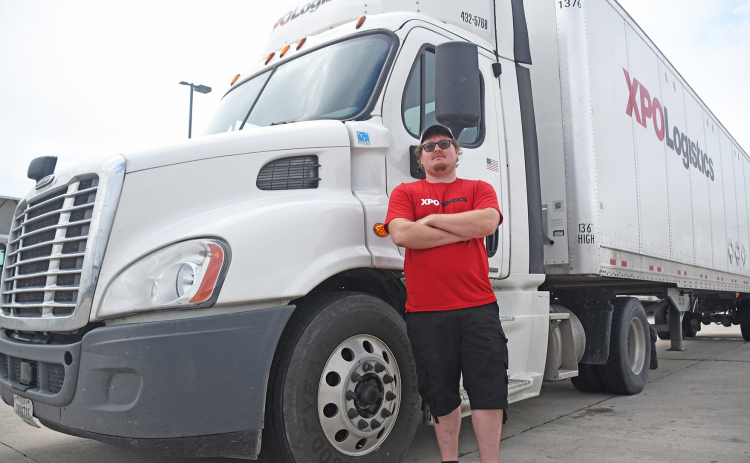
“No company is immune from the supply chain issues right in between chain disruptions and labor shortages, equipment as well,” said XPO Logistics terminal manager Tamar Jimenez.
Interstate Battery is part of a retail chain that delivered batteries to auto shops and dealerships in a certain area. Owner Zack Danhauer stated that there are two big concerns with the supply chain: fuel and keeping the right amount of stock.
“Demand has gone up on for automotive batteries as people have less free cash,” Danhauer said. “They stopped buying new vehicles, so they fix old vehicles, which keeps older cars on the road and the demand goes up.”
The stress of delivering batteries meant that some clients had to be dropped by various vendors which represent Interstate Batteries.
“We have vendors that are firing customers because they are difficult to serve,” he said. “We know they’ve fired some very large national customers because (the client can buy) every battery they can make, paying whatever it takes to get it.”
Danhauer has sought to implement strategies to keep prices down and retain clients: taking the costs, combining routes and stocking up on as much battery types as they can in order to anticipate any supply issue. A warehouse filled with batteries could be a liability if they can’t sell enough by the time of Christmas, he explained. 
“We’ve been able to make lemonade from lemons, but, at a certain point, it can break,” Danhauer said. “I don’t know when that point is. We’re absorbing fuel now, but if that gets higher, we will have to pass that on.”
Stettner Inc.
Larry Stettner, president of Stettner Inc., runs a trucking company that carries mostly fuel and ethanol, as well as cattle and fertilizer around Nebraska and Kansas. Stettner has experienced the economic environment in trucking since starting the business in 1976, with no supply chain issues until the pandemic. 
When people stopped driving in the early months of the pandemic, fuel prices and request plummeted for the local family business. But now, the roads are wide open. 
“Now, we’re pretty much back to normal,” Stettner said. “Everybody’s going and everybody’s out driving on the highway.”
Stettner often has his crew of four drivers take fuel out of the Aurora Cooperative ethanol plant, Doniphan and Geneva, with some delays in loading times for two to three hours though he said that was normal for the time of year. 
The cost of business has forced some changes, as maintenance is often pushed back.
“Right now we haven’t had a lot trouble with the shop because we have new trucks with old motors in them, so they don’t need all the emissions and such,” Stettner noted.
Fuel costs even affected those that transport the energy to gas stations with the increase in prices.
“It takes anywhere from $1,000 to $1,200 to fill one (truck) up,” he said. “(Before) it was probably $400 to fuel.”
The cost or surcharge of shipping has increased to upwards of 60 percent of pre-pandemic levels, according to Stettner and his secretary/wife Barbara.
“When they saw the surcharge, nobody said anything,” she said. “I was wondering how that would go, because that is a lot of money.” 

Love’s Travel Stop
Love’s Travel Stop district manager Kevin Elwood, who has worked in the area for two years, commented that truck drivers’ biggest problem is the rise in diesel fuel.  
“They both fluctuate,” he said while comparing gasoline and diesel. “The gas seems to be going up and down, while diesel just kind of creeped up and stayed up. Diesel continued to rise where gas seems it’s just very volatile at this point in time.”
Love’s prices come down from corporate office analysts who calculate cost of fuel and how much it will take to get there. 
But that was not the only type of fuel truckers come in for at Love’s. Food and other products have been difficult to keep in stock, according to Elwood.
“I mean, it’s sporadic,” he explained. “It’s just product shortages that you don’t anticipate. It might be coffee creamer and straws and cups one week and two weeks later, other products to make Subway sandwiches...It’s just whatever industry, during that couple of weeks period, is seeming to be struggling.”
The summer months until Labor Day will be busy times for interstate traffic, including transportation. But one slow down might come from truckers who defer maintenance costs until the issue is critical, which does impact a service that a third of Love’s locations provide, according to Elwood. 
“Maybe they’re not getting an oil change as frequently as they had been,” he noted. “They’re going a few more thousand miles before they do that or if they’re in the shop, getting some work done. They’re going to defer that or other preventative maintenance that doesn’t have to be fixed right at that point in time. Just try, like everybody else, to control their budget during this tough time.”
Despite any issues that the supply change may bring to Love’s, Elwood was confident that the amount of connections the national chain has will help them keep shortages to a minimum. 
“So from an internal supply chain, I think we have a great support system out of our corporate office in Oklahoma City that works with vendors to try to source alternative products,” he claimed. “If one vendor is struggling to get something, they have lots of connections and we have almost 600 travel stops across the US, so we’re a pretty big player in that market. So they’re able to source from other vendors if one is struggling to get something. If we are out of a product it’s for a limited period of time.”