
Cars, parts run into supply chain traffic jam

Subhead

Local owners, managers express concerns with market
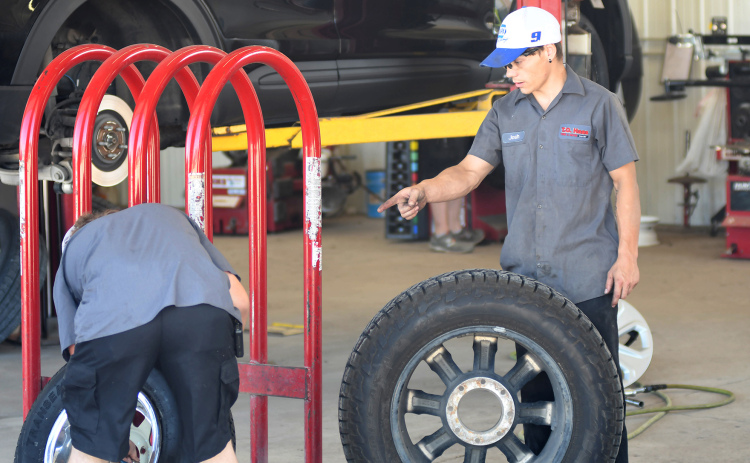
Editor’s note: This is the fourth in a series of articles focused on supply chain shortages and delays and how they are impacting local business and industry. This report highlights feedback from Aurora-based automotive companies.

Summer seems made for all things related to cars and vehicles. The road trip, buying a new car and repairs all to hit a peak during the heat of summer.
But with the heat comes supply chain issues that delay and raise prices in a time where local Hamilton County professionals in the car industry report that they are seeing high demand. 
“Pricing wise, it’s not very often, but we have a seller’s market, as I call it,” said Jason Roe, owner of Roe Chevrolet Buick. “It’s created such a demand to where we can sell vehicles for our ‘sticker price.’ We haven’t strayed above that, at all. A lot of dealerships are going above and over MSRP (Manufacturer Suggested Retail Price) by thousands upon thousands of dollars, lots of crazy money. They (customers) need to make a decision sooner than later compared to how it used to be.”
Roe said his dealership doesn’t not believe in forcing people to make a quick decision regarding a vehicle purchase.
“But you also don’t want them to lose out on something that they’re that they’re definitely interested in,” he added.

Making a deal 
The two dealerships in the county, Friesen Ford and Roe Chevrolet Buick, have had a series of delays in getting local customers the cars that they want, most dating back to the time of the pandemic. 
“Oh, we’ve got back orders over a year,” said Jason Friesen, owner of Friesen Ford. “They’ve had birthdays.”
Some packages, which customers may expect as common place now in newer cars, are simply not on the market. 
 “They can’t produce certain packages, due the chip shortage,” Roe said. “Say packages with more equipment, so like a technology package that would have a heads up display and rear-view camera.”
Semiconductor chips are at all-time low, according to USAToday, making the mentioned technology unable to be reproduced in a timely fashion. That shortage is added to the costs of vehicles, as many of them need chips in order to even start the engine. 
“You have the supplemental restraint control module and so that is the computer that controls airbag and seatbelt deployments,” said Trevor Emahizer, owner of the Aurora Body Shop. “You know, those are kind of what control modules are the brains for that system of the vehicle.”
The shortage has even affected the tradition of haggling over the price with a dealer as the two owners explained.
“There’s a little bit of negotiation on price but the customers behavior now is like more: ‘I have the vehicle, I want to see the vehicle, I want this here, I’m going to buy it,’” Roe stated. “Also, you’re selling vehicles where we get interest from all over the country now. We basically are trying to sell everything as local as possible.” 
Even as prices stay fixed, the dealers must also adjust with the market value rising more and more as inflation due to supply chain issues keeps hammering the industry. Friesen said prices keep going up by 20 to 30 percent at a time.
For now what dealerships can do is limited to the market and trying to match the vehicle with the customer’s patience to get it. 
“We can’t control how they’re building vehicles, if they’re building vehicles and when they’re building vehicles,” Roe said. “But, we do whatever we can on our end to get people what they want for a solo order that people have been waiting for.”