Vows to continue to push EPIC Option
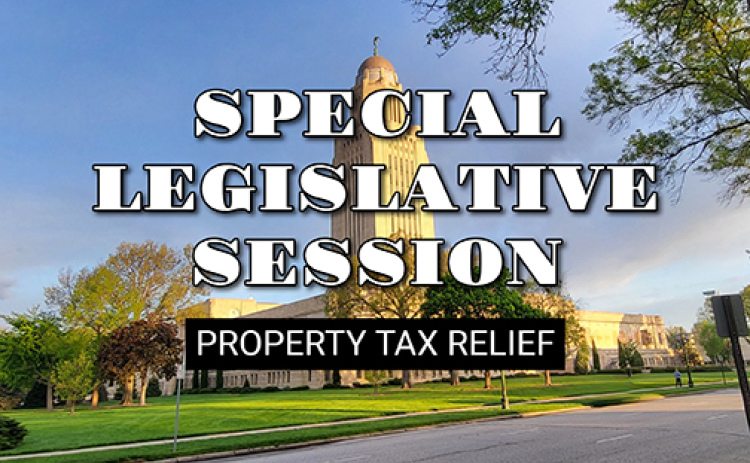
The special session of the Nebraska Legislature ended last week after just over three weeks of working on its intended goal of bringing about property tax relief for the state’s property owners. The session ended with the passage of a compromise bill known as LB 34, which does not slash property taxes by the amount hoped by many, but merely slows the rate of growth in coming years. Dist. 34 Sen. Loren Lippincott was one of many legislators who was critical of the bill for not going far enough in cutting property taxes. Lippincott said while LB 34 does contain some good ideas, it will not deliver the kind of property tax relief Nebraskans really need.
“Although the governor had a plan to produce property tax relief, there was no consensus among the body and it became a game of carve-outs which no one wanted,” Lippincott said.
The senator said the result of the special session is that, while property taxes will continue to go up, thanks in part to rapidly rising property valuations (see the front page story in last week’s ANR), the legislation means there will be a slightly smaller increase in property taxes next year.
“Our legislative body with its seemingly default setting of filibustering any bill not palatable to the minority party, requires a super majority to pass any bill,” he said. “Not only does this lend itself to chronic compromises, but it takes a long time to finally get to a vote.”
Sen. Steve Erdman of Dist. 47 was less measured in his comments on the result of the session, saying, “I would rather just go home than to give 3 percent. It’s a slap in the face!”
Sen. Lou Ann Linehan, on the other hand, struck a somewhat optimistic tone, saying, “I am very hopeful that today will turn out to bring a lot more tax relief than people realize.”
When signing the bill last week, Gov. Jim Pillen restated his commitment to cutting property taxes, saying the special session was just the beginning. However, he said he has no plans to call another session on taxes yet this year.
“We’re going to make sure that we fix this property tax crisis so property tax income is the lowest in our state,” the governor said.
In an op-ed sent out on Friday, Pillen reiterated his commitment to bringing property taxes down, titling the piece, “We need to do more.”
The governor said, “Most people view out of control valuation increases as the problem. Excess spending is the real issue. Implementing hard caps is a gigantic step in the right direction. This will decrease property tax increases by county and city governments.”
Lippincott said LB 34 was a bill that had been introduced by Sen. Tom Brewer which was amended by the Legislature’s Revenue Committee to include ideas from two previous bills that had failed following debate on the floor.
“Money has to come from taxpayers to run the government,” he said. “So when we look at cutting taxes in an area, we must either cut the budget so we spend less – which no agency wants – or we must tax something higher or something new to make up the difference. Our Appropriations Committee found money in the budget to cut, we worked with the governor and the agencies and decided what needed to stay and what we could cut.”
However, Lippincott noted that the slightest change in the status quo can lead to a great deal of pushback.
“It is a balancing act and that is why it is so dynamic,” he said. “Nebraska law requires us to have a balanced budget. That is such a good thing. It means we have to use the taxpayer money well and where it is most needed.”
The senator said the biggest impact of the session on him was to confirm his commitment to a tax reform solution he has been promoting for some time – the EPIC Option, which would eliminate property, income and corporate taxes in the state, replacing them with a consumption tax on new items only.
“It does not penalize productivity, it promotes it,” Lippincott said. “Read the Federalist Papers. The idea of a consumption tax started with Alexander Hamilton...”
Lippincott urged constituents to contact his office for resources to read about the consumption tax and encouraged them to email him with ideas for cutting taxes.
“Often the best ideas come from our neighbors next door,” he said. “I encourage the community to give input. We often hear opinions on what not to do, but we don’t often hear solutions.”
Asked what had happened to Pillen’s radical plan to shift the burden of public school teacher pay to the state in order to remove that expense from local property tax payers, Lippincott said, “The Revenue Committee worked closely with our school districts and ran numbers trying to ensure every percentage point would not leave them worse off and the numbers never quite worked.”
Lippincott said the two most important changes made by the legislation were to front-load the existing property tax credit made available under a bill passed in the 2020 session. The credit, which previously had to be applied for but often wasn’t, will now be automatically deducted from each property tax statement, meaning that taxpayers will no longer have to apply for it.
The bill also places spending caps on the political subdivisions such as cities, counties and school districts, limiting them to increases of zero or the inflation rate. However, he said those local government taxing entities will be able to override the cap through the election process.
Considering the scope and intended purpose of the special session, the just over three weeks it took to produce a final bill may seem short to many, however, Lippincott says the session was initially scheduled to end on Aug. 15 but continued on until the 19th, making it the longest special session in Nebraska history..
Because of an emergency clause added to the bill, most of its provisions will go into effect on Oct. 1.
Like the governor, Lippincott said he is in the tax cutting battle for the long haul.
“In January we begin a 90-day legislative session,” he said. “We will continue to work on a solution.”