
City reviews JEO’s proposed Aurora Trails Study

Subhead

Report includes master plan of new, enhanced trails
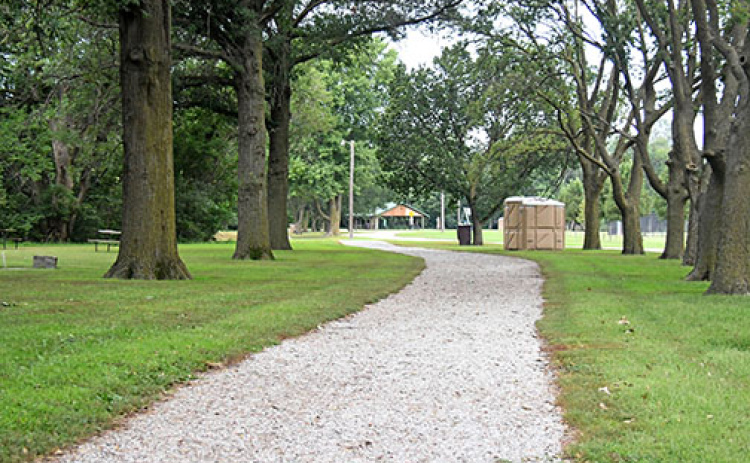
A team of JEO Consulting interns spent the summer studying Aurora’s existing trail system, then shared its findings on how the city might consider expanding its trail network in a final report presented at the Aug. 13 council meeting.
Payton Best, a JEO engineer who has worked on a number of Aurora projects, informed the council in May that the company was devoting time and effort of five interns to study the city’s existing trails then discuss newly proposed trails with city staff and members of the Aurora Trails Committee to see if there is any potential connection between the two. The project came at no cost to the city, which Best explained as an opportunity for JEO to give back to the community.
Though the draft trails study was presented as only 90 percent complete, with final changes to be made in the next month, Best said it represented a great deal of work by the interns, all of which was reviewed by JEO engineers.
“So our objective with this presentation and with this report was to find and present some recommendations on proposed trail alignments for the city of Aurora,” said Haley Lux, an engineering student at Iowa State University. “As you’re well aware, Aurora is currently experiencing a lot of growth in both residential and business aspects, and there are several new subdivisions that we’ll talk about later, and businesses that are developing all throughout the city. And so while these trails can be used a lot for recreational purposes, as many trails are, it can also be used as alternative routes of transportation throughout the city, and it’s a great way to keep this ever-growing community closer than ever.”
Other interns involved with the project included Caden Cerny, a student at the University of Nebraska-Omaha, as well as Calan Mikos, Carter Probst and Michael Leiting, all studying engineering at the University of Nebraska-Lincoln. All five interns took turns sharing insight from the detailed 33-page study, copies of which are available at Aurora City Hall upon request.
The report outlined the existing status and length of the Streeter Park Trail, Cole Park Trail, Dark Island Trail, Leadership Center Trail, Lincoln Creek Trail, Pioneer Trails Recreation Area, as well as a trail proposed to run north and south along 1st Street as part of a pending reconstruction project, with that trail set to connect to other existing trails in the area. It also included supplementary information for each proposed trail, including design considerations, recommendations and funding sources.
“Another reason we made this report was that it helps a lot with funding,” Lux said. “Having reports like this make places more willing to help you donate. And so the presentation will be in order from existing trails, we’ll talk about future developments in Aurora, design considerations, proposed trail alignments, our recommendations and next steps and some potential funding sources for the trails themselves.”
To help visualize the study and related proposals, the team prepared a color-coded master plan showing each of the existing and proposed trails with a designated color line overlapped on a map of the city. Based on feedback from city staff and the trails committee, many of the recommendations involved replacing existing trails with 8- or 10-foot-wide concrete trails, with a compromise suggested in Streeter Park, where the team recommended an eight-foot-wide concrete trail with a three-foot shoulder.
“This would give the best of both worlds for runners who prefer aggregate and people with bikes and strollers who prefer the concrete,” said Leiting. 
The JEO report also proposed constructing new trails in the Northridge Subdivision, a Beechwood Trail connecting the northeast corner of the city to the Northridge and future Northridge subdivisions, as well as a new central loop trail running through the middle of town from the school to the courthouse and on to Poco Creek Golf Course.
“This is running on the south side of L Street and again it connects the school system to the downtown business district and then to the golf course, making a full loop of all of the proposed trails,” explained Carter Probst. “This one is our longest, running 8,700 feet, and since this is residential, we’re proposing eight-foot wide concrete here.”
Probst went on to point out the Cole Park connection, a trail which would run along the north side of O Street, connecting Memorial Hospital and Cole Park to the rest of the trail system, as well as a North Loop Trail, which wold run along the north side of Terry Road, providing a safer route along the road for pedestrians considering that it’s a gravel road without any sidewalks.
As for the proposed Northridge Subdivision Trail, Probst explained that the team recommended addressing that in two phases, with the first phase connecting the soccer fields to the parking lot above the ball fields, and a second phase which would extend north as the subdivision develops. And finally, he mentioned the Streeter Subdivision Trail, a proposed 3,700-foot stretch of 10-foot concrete connecting Streeter Park to the rest of the trails within the city.
If fully implemented, the recommendations would boost the total walking length for the city’s trail system to 45,000 feet.
Based on the significant though undetermined cost of implementing the entire plan, the team concluded its report with a series of recommendations, including priority projects. The first priority listed was the first phase of the Northridge Subdivision. The second priority listed was the second phase of the Northridge Subdivision, and the third was to update all of the existing aggregate trails to concrete. Fourth on the priority list was the North Loop Trail along Terry Road, which would complete the trail loop alignment in the northwest portion of the city.
After detailing the proposed trail changes and additions, the team concluded with suggestions for next steps, beginning with public outreach.
“We put together a preliminary list of strategies to be utilized for outreach, the first of which being setting up direct letters to the most affected property owners, basically just highlighting some of the benefits of the trail, expectations of the city and answers of maybe some frequently asked questions,” intern Calan Mikos advised the council. “The second would be one-on-one meetings on a case-by-case basis with those same residents. Third would be finding trail champions, people that are able to promote and use the trails actively, that will push for this project to be completed. And then fourth, and finally, would be a maintenance plan to show the residents of the city that this project will not just be abandoned after it’s completed.”

Trails committee reaction
At the conclusion of the report, Will Jackson, chairman of the Aurora Trails Committee, spoke up also thanking the group for its work.
“I speak on behalf of the trail committee, and first of all, they did a great job,” Jackson said. “When I look at this, I get really excited because I think there’s a lot of opportunity here. I’ve lived in Aurora about 7-1/2 years and I’m very impressed with the trails that we already have. When I look at this, I’m like, we could go from good to great.”
“I look at this as a wonderful opportunity,” he continued. “It doesn’t all have to be done at once, and we could do it piece by piece. I think the big thing everyone sees the south loop (along L Street), and we’re like, whoa, that’s a lot of property. My house sits on that south loop, and there’d be a lot of things, and we’re not opposed to that. We just know that’s a big project, and so that’s why we prioritized some of those other trails first. 
“And the last thing I want to kind of mention is, I’m not trying to take away any attention from the Inclusive Park at all,” Jackson added, “because that’s getting a lot of attention right now and they have an awesome committee. But you know, the trail is a part of that park, and I think that’s a big picture we really want to look at is that Inclusive Park to have this all ties into that, and really it’s benefiting all of the warrants for better health and wellness.”
Council members thanked JEO and the student interns for their work on the project, but took no action.