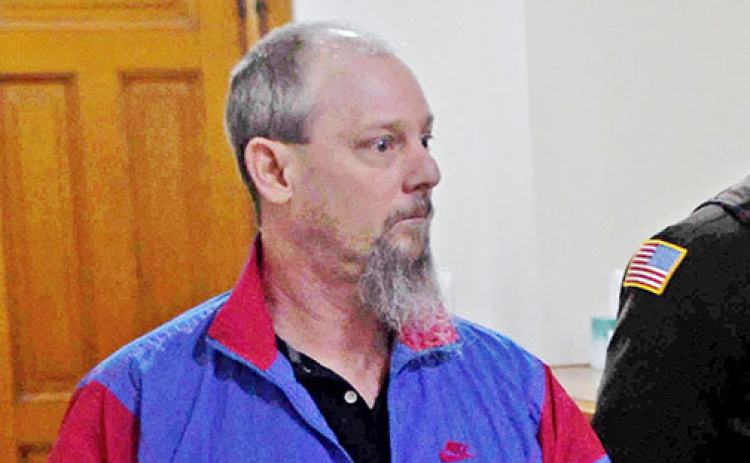
Sentencing date set for Oct. 17
A Hamilton County jury found Jeffrey Adams guilty of murder in the first degree in the Feb. 26, 2023 death of his wife, Angela last Tuesday.
After receiving the case against the 48-year-old Marquette man following closing arguments early Tuesday afternoon, the five woman, seven man jury returned to the courtroom at about 7:30 that evening to deliver its verdict. The decision followed about six days of testimony in the trial.
With the calling of three more witnesses on Monday the prosecution rested its case against Adams early that afternoon and court was in recess until Tuesday morning. At that point attorney Matthew McDonald began presenting his case, calling just three witnesses — Adams’s brother, Shaun, his son, Tanner and Adams himself.
In his testimony on the stand, the defendant said he could not remember what happened the night his wife died because he was intoxicated. He also admitted to hitting Angela but said he did not intend to kill her. He said he had left their house in Marquette following an altercation and spent the rest of the night driving from place to place — a fact investigators were able to partially confirm using Adams’s phone records.
Among the 27 witnesses called by the prosecution in the case were forensics experts who testified that the victim had been physically assaulted and strangled.
Adams will have to wait in the Hamilton County Jail where he has been housed since his arrest until he learns his sentence on Oct.17. Hamilton County Attorney Douglas Dexter said on Friday he assumed the sentencing date was set that far out in order to give the victim’s family time to write statements regarding the sentence. Several members of Angela’s family sat through the entirety of the seven-day trial.
He said the mandatory penalty in Nebraska for first-degree murder is life in prison with no opportunity for parole.
First-degree murder can also result in the death penalty in Nebraska, but Dexter said the state did not seek that during the trial because the circumstances of the murder did not warrant it. He said he would have had to charge the case as a death-eligible murder. Dexter said a charge of capital murder is generally reserved for extreme situations such as the killing of a law enforcement officer or a murder-for-hire situation.