
Fig Tree & Vine purchases 250 acres to build a village in Uganda, East Africa
“Everyone will sit under their own vine and under their own fig tree, and no one will make them afraid,” (Micah 4:4) is the motto that nonprofit organization Fig Tree and Vine strives to live by in its mission to grow a village that will become home to 3,000 Acholi people in northern Uganda.
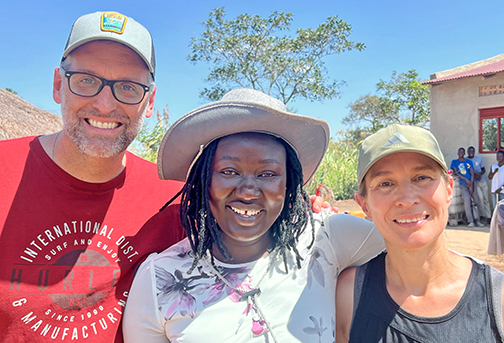
That mission was brought to the attention of the Aurora Rotary Club by Fig Tree and Vine founder Jennifer ‘Jen’ Ramaekers during its noon meeting on Wednesday, Dec. 17. After adopting two of her children, Jordan and Sofia, from Uganda in 2015, Ramaekers along with her husband, Ryan, was inspired to start Fig Tree and Vine by seeing the resilience amidst struggles from kids that were helped by the nonprofit, Kids Inspiring Kids.
“That image, dignity, safety, self-sufficiency is at the heart of what we’re trying to achieve with this organization,” Ramaekers said. “We exist to help families who are displaced by war. They lost their land, their livelihood and all opportunities to get out of that position.”
In the 1980s, Ugandan warlord Joseph Kony founded the Lord’s Resistance Army in an attempt to cleanse Uganda of the Acholi people. Survivors fled from their villages to the capital of Kampala. Uganda is considered the second youngest country in the world with nearly an entire generation lost due to the war and AIDS.
“You hardly see anyone that’s between the ages of 35 and 50,” Ramaekers said. “They’re mostly kids that are 15 and under. So many of these kids don’t live with their parents. They’re living with grandparents, great aunts, great uncles, whoever can take them in. There is a huge need.”
Ramaekers noted that between 35,000 and 75,000 Acholi people live in the approximately 30-acre Banda Acholi Quarters in Kampala. She said that’s an area about the same size as Stolley Park in Grand Island.
The Banda Acholi Quarters, along with other slums in Kampala, are at risk of demolition to make way for high rises. A common way for people to make a living is by working in the rock quarries.
“The women will go and they will beat the rocks into gravel and try to fill a jerrycan-like watering can,” Ramaekers said. “For each watering can they fill, they will get 1,000 shillings. A thousand shillings is not very much. If you have 3,500 shillings, you have one dollar. So if you fill three of those with gravel in those jerrycans, you can get a dollar and that’s what they live on in that area.”
A self-sustaining village
While Fig Tree and Vine’s initial mission is to help the Acholi find a safe environment to live, the ultimate goal is to build a village near the northern Uganda city of Gulu where they can thrive and become self-sustaining.
“So many times, when you think about nonprofits, especially in Africa, they’re offering handouts and it’s a short-term solution and this leads people to become dependent on these handouts and that’s not what we want,” Ramaekers said. “These people, they’re resilient and if you give them the opportunity, they will take their ability to fish and they will make a life out of it. If you teach them how to plant and harvest, they will make a life and this responsibility just continues to expand.”
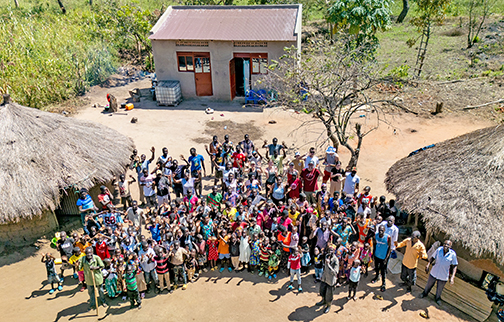
The first move of the organization was to purchase100 acres of land which had four structures that had been built on it previously. The land also has a water well and a latrine.
“These people don’t live there right now, but they live in the area around and they just flocked when we came,” Ramaekers said. “They are excited about what we’re doing. They want to be a part of it.”
Currently, the village has 15 acres dedicated to growing coffee and bananas. Villagers are also raising corn and are building up herds and flocks of cattle, goats and chickens.
“We have 380 chickens that we’re raising here (in our chicken coop),” Ramaekers said. “This was built while we were there in January... We used money from POP (The People of the Past program done annually by seventh grade students at Aurora Schools), so we used that money that we got from POP to help purchase our chickens. The government gave us 2,000 coffee plants. They will give any farmer that wants to plant coffee 2,000 plants for free.”
Ramaekers said the villagers worked hard to set up the coffee nursery.
“(We) didn’t think it would be too hard, but when you have no power tools and you’re putting everything together with 16-penny nails, it’s a lot more work than you can imagine,” she said.
One person helping from Uganda was vice president and director of Uganda NGO Operations, Filda Lakite, who made it her life’s work to help Acholi children as others had helped her.
“She is a mother and a leader in the community, in her family and for us,” Ramaekers said. “She is the heartbeat of what we do. While we were there, we were able to interact with the family that’s remaining of Jordan and Sofia. So they were from the slums – the Banda Acholi Quarters – and their grandfather is still there.”
During the presentation, Ramaekers played a video sent to her by Lakite which showed the current growth of the village’s sunflower crop.
“So our sunflowers are doing quite amazing,” Lakite said in the video. “We had people come and ask us how we are doing this. The village people are learning new ways of farming. I’m glad we were able to share these skills with the people and improve agriculture in our region. I think they will use this to make sunflower oil and other sunflower products that I may not know, but everything is working together. I’m so happy. We thank God for the rain and we thank God for the sunshine that our plants are able to thrive.”
Ramaekers said other nonprofits are also helping with the project, including the Orphan Grain Train, a Christian nonprofit organization that collects clothing, medical and other aid for those in need.
“We worked with the Orphan Grain Train to have toothbrushes and toothpaste,” she said. “We had handed those out and had just enough for every single person who needed one.”
Other planned Fig Tree and Vine projects include a solar panel system for energy, a school system for children from early childhood to secondary school, a medical clinic, athletic fields and purchasing an additional 250 acres of land for future expansion.
“If we outgrow our land, the family has 250 more acres that they will sell to us that we can expand and build the housing for all the people to come up,” Ramaekers said. “When they come, they will have jobs. They can work in the school. They can work the land. They will be valued and they will be able to not just survive, but actually thrive over there.”
Ramaekers commented that the nonprofit is seeking to add staff housing for Lakite, her foster children and other staff.
“We’re trying to keep within the culture there,” she said. “It’s not going to be elaborate buildings. They’re going to be square concrete school buildings and we’re just going to really work on the sustainability.”
While noting that donations are always needed and welcomed, Ramaekers said her main goal is to spread the word about Fig Tree and Vine’s mission.
“If you guys feel the heart behind this mission and want to share connections or just get the word out, that’s really very valuable to us at this point,” Ramaekers said. “Of course, we will take monetary donations at any time, but we need people to know about us. We want to share what’s going on. It’s exciting to see what can happen with what little we have.”
Additional information about the organization’s projects and a donation link can be found at figtreeandvine.org.