
Natives of Israel and the Philippines share Christmas traditions in their homelands
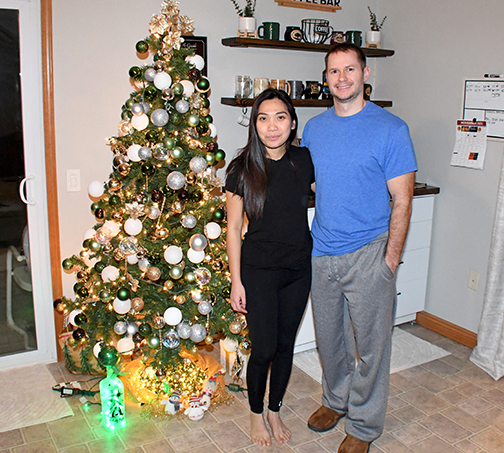
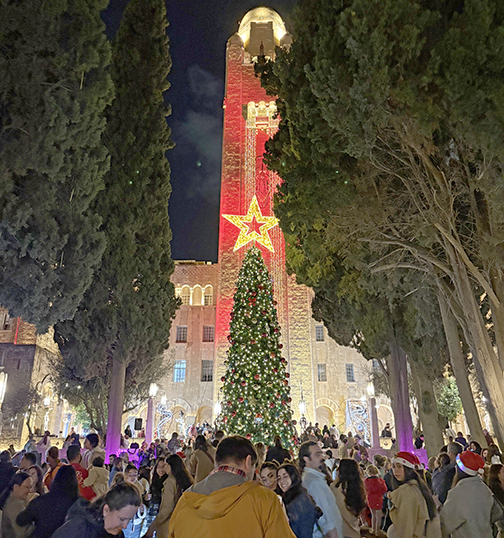
Although the two nations are separated by more than 5,400 miles with vastly different cultures and lifestyles, Christmas still finds its way into the national consciousness of both the Philippines and Israel every December and each nation has its own special ways of celebrating the birth of Christ. The unique Christmas customs of those countries were the subject of recent interviews with two local women -- Filipino Kimmy Oberle and Israeli-born Tamar Jimenez -- who were both happy to share their native country holiday traditions with our readers.
Christmas in the Philippines
Born and raised in the Philippines, Kim Rose “Kimmy” Oberle came to Nebraska three years ago on an H-1B visa to work as a medical lab tech. After meeting Eric Oberle, a registered nurse at Memorial Community Hospital, the pair got married last January and now both work for MCHI. Even before they were married, Eric became aware that there would be some adjustments to his American Christmas customs in his future.
“When we were still dating last year, I came here, and I wanted to surprise him so I started setting up Christmas tree (in September),” she said. “I think he was so surprised, because it’s probably so early for him, because we don’t have Thanksgiving and we don’t really celebrate fall, you know the pumpkins. We don’t have that thing in the Philippines because we have pumpkins in the Philippines all season.”
This year Kimmy put up a fully decorated Christmas tree in the living room on the first of September.
“We always do that,” she explained. “So growing up, especially in the Philippines, the Christmas season unofficially begins as early as September, so like public spaces would start decorating Christmas trees and playing Christmas music, in hospitals, in the school and offices as early as September.”
She explained that’s partly because there’s no Thanksgiving holiday in the Philippines, but also because September is the first of the “Ber Months.”
“Filipinos invented that,” she said. “We have Ber Months, so starting in September, it gets cold and we don’t have Thanksgiving. We don’t have holidays in Ber Months, only Christmas and New Year. So it started a long time ago.”
Asked how long ago, Oberle replied that she was not sure, but remembers her grandmother talking about the “Ber Months surrounding the celebration of Christmas.
(Of course, most Nebraskans would not find the fall weather in the Philippines to be especially – well – “brr,” since the coldest it gets there is in the upper 60s. Oberle said the record low she can remember is 68 degrees. It is, however, the rainy monsoon season in that part of the world.)
An internet search of the subject confirmed Oberle’s statements about the months-long Christmas celebration in the western Pacific island nation, and, in fact, it noted that Filipinos have the world’s longest Christmas season. The tradition is said to be deeply rooted in Spanish colonial Catholic practices dating back to the early 16th Century when the islands were colonized by Spain. Those traditions include Simbang Gabi (a series of dawn masses) and are fueled by strong family ties, the tradition of saving for holiday gifts and feasts and the legally mandated “13th-month pay” that is received before Dec. 24.
If you think about it, since their Christmas tree goes up the first of September and won’t come down until possibly the end of January, it’s Christmas at the Oberle house just one month shy of half the year!
Speaking of the Roman Catholic Simbang Gabi masses, Oberle said, even though she grew up in a protestant church, that tradition was well known to her during her growing up years.
“This is a series of nine early morning masses from Dec. 16 to Christmas Eve, so completing all nine masses is believed to grant a Christmas wish,” she said. “So I remember growing up, my Catholic teachers, my friends, would wake up like 4:30 before school to go to Catholic churches. They would be happy if they were able to complete the nine days straight. But we don’t have that in our church. We just have Christmas Eve service around 8 to 9 p.m. and that’s it. That’s what we have.”
Not-so-silent night
Asked about gift giving traditions in the Philippines, Oberle said, “So we have Noche Buena (The Filipino term for Christmas Eve and literally from the Spanish “Good Night”). This is the main Christmas Eve feast that takes place after midnight mass with families staying up late to share a large meal and open gifts. So in the Philippines we would stay up until midnight on the 24th and we will, like, have a lot of food in the house and then very loud fireworks. So I remember growing up, my dad would turn on our vehicle – I don’t know what’s the story behind that – but they would turn on the vehicle and make a loud noise, really loud. And they intentionally turn on their motorcycle, and it will be so loud. It’s opposite here, yeah, it’s very quiet here on the 24th – ‘silent night’ here.”
She also said gift giving is a big part of the celebration of Christmas both among families and elsewhere.
“And then we will have exchange gifts in our workplace, in our school and inside the house, and each company and hospitals and whatever business they would have a Christmas party,” she said. “We would receive gifts from our godfather and godmother growing up – it’s usually money or like toys – so it’s a big thing having a lot of godfathers and godmothers in the Philippines.”
Oberle said Santa Claus makes appearances at the malls and other locations at Christmas, but he doesn’t seem to have as big a public presence as here in the U.S. However, the man in the red suit is still credited with bringing gifts to children, but in the Philippines it’s not socks he fills but whole sacks.
“Our parents would introduce us to Santa Claus, and they will put gifts in our sack,” she said. “We would leave a sack in our room, and then our parents would put in gifts and would make us believe that it’s from Santa Claus.”
Oberle said there’s nothing special about the sacks, and in fact the bags left out for Santa to fill might be just empty rice sacks.
While keeping her Filipino Christmas traditions does help Oberle keep in touch with her roots, she said they also tend to make her homesick, especially for her family almost 8,000 miles away.
“I miss home and it makes me miss how we do Christmas back home,” she said. “It’s really different here. We just went home the last week of July, and then we came back here in August. So I just saw them few months ago, but I really miss them. I miss our culture, like especially on Christmas.”
Fortunately, Oberle said she has several co-workers in the area who are also from the Philippines, and all of them keep the same Christmas traditions from their homeland.
Christmas in Israel
Tamar Jimenez is one of those rare individuals – at least in this area – who celebrates two important religious holidays at this time of year. Born in Israel to a Jewish Holocaust survivor father and with an American mother who was raised as a Baptist, Jimenez grew up celebrating both Christmas and the December Jewish Festival of Lights known as Hanukah, which dates back to the 2nd Century Maccabbean revolt against the Romans. She calls the hybrid holiday celebrated in her home “Christmahanukah.”
Growing up in the Mediterranean port city of Haifa, located directly west of the Sea of Galilee, Jimenez recalls both holidays being important in her home.
“I was lucky,” she said. “My mother was raised Baptist, and she had to convert to marry my father, which isn’t an easy task. They want to make sure that you are truly devout, not just to the marriage, but to God, but with her upbringing and of course, the influence from my mother’s side of the family, Christmas for us was a big deal, because either they would come and visit us in Israel, or we would get postcards and gifts and whatnot. So Christmas was always special.”
Having a Christmas tree at home wasn’t a part of that celebration, however.
“In Israel a lot of the buildings were like 80 to 100 years old, in Haifa anyway,” she said. “So no elevator, and there was no way my father was going to drag a tree up to the top floor of the building where we lived. For us, it was about the food. My mother just always loved American mashed potatoes and stuffing was a huge deal. And those weren’t common foods in Israel back then. So my mother made everything from scratch, which was really nice. So the feast was always one of my favorites.”
Jimenez said while they didn’t have a tree at home, they could still see Christmas trees from their house on a hill. Using binoculars they could look down to an area where a number of Christians lived and see Christmas trees everywhere. They could also see the snow on the top of 9,200 foot Mt. Hermon (Israel’s highest peak) 74 miles away to the northeast.
She said Jerusalem is also awash in Christmas trees at this time of year.
“There’s just trees everywhere, and it’s just a huge celebration, everything’s decorated,” she said. “It’s just amazing. It takes your breath away.”
She also said that the town of Bethlehem, located five miles to the south in the West Bank, is naturally a destination for many Christians during Advent. (The Church of the Nativity which is shared by several Christian traditions is there and in a grotto located beneath the chancel is the spot where many believe Christ was actually born.) However, because of her Jewish heritage she is not allowed to travel there.
“I’ve never been allowed to go unless I was patrolling in the defense force there, so it wasn’t so much of a religious or tourist trip for me, but more for security reasons,” she said. “So I never got to witness Christmas in Bethlehem. I imagine it’s amazing, but a lot of them would migrate through there around Christmas, especially.”
Celebrating ‘Christmanukkah’
Speaking of her family’s merger of Christmas and Hanukkah, Jimenez said, “They did intertwine and for us it seemed normal, of course. For Hanukkah, you light the candles, and every day you light one more candle. There’s a prayer that you say as you go, and there’s your traditional food for Hanukkah, but it doesn’t match what you have for Christmas. So usually around that time of year, everybody gains weight because there’s a lot of food everywhere, but for Hanukkah – Christmanukkah is what we called it growing up – you would start the evening with your dreidels (a four-sided spinning top). You play these dreidels... And we would play that along with having the food that my mom would make. And then my father would come home and he’d make the Israeli food for Hanukkah. So we had a little – and I didn’t realize it was a thing in America – but a Hanukkah Bush, so there was no way we could drag a tree up five flights of stairs, but we had just a little bush, and my mom would decorate it for Christmas in our home.”
Jimenez said the annual observance would often start with the celebration of Hanukkah.
“You have to light the menorah right before sunset, just like you do on a Sabbath,” she said. “So every Friday night, you would light the candles at sunset, and then the Sabbath and Hanukkah will remain as such until the sun sets the next night... So for us, we would start with Hanukkah. We would light the candles, say our prayer for that, and then we would evolve into the Christmas things, because often Hanukkah does run with Christmas, which I can only think of a couple times where it hasn’t. So for us, among the numerous days of Hanukkah, Christmas would finally come, and everybody would just be super excited, and it got to a point where all the kids in the neighborhood would end up at our house because they knew that we did Christmas also.”
Beyond the sacred traditions, however, Jimenez said the celebration was about the atmosphere created.
“It was just about the feeling that the holiday brings,” she continued. “So for me becoming a mom and raising my kids in America and still being Jewish, we don’t just stop being Jewish, and it’s lovely to hear from my daughters, too, how that’s their favorite time of year. They never felt like they had to pick one religion over another because their father is Catholic. But just about how we made it so, so warm.”
Jimenez recalls that during her time serving in the U.S. Navy she often reached out to comrades who didn’t have a place to go at Christmas time.
“And it could be a Christian or a Jew or a Muslim, but they were always welcome at our house,” she said, noting that she tried to carry that tradition on as she was raising her daughters.
“I love that I got, I think, the best of both religions, because Jesus was such a big part of the Jewish history to begin with,” she concluded. “And so I love that neither of my parents denied us from either avenue, but let us decide for ourselves what we want to worship.”