
Marquette woman shares experiences as a WWII Air WAC

Much has been made of the contributions of American women to the winning of World War II. In addition to the women on the home front who raised “victory gardens,” contributed to salvage drives, staffed military canteens in places like North Platte and often had to send their sons off to war, there were the many women who left home to work in the traditionally male-dominated factories of the defense industry. “Rosie the Riveter” became an icon for these women who helped build the war planes, ships and tanks. Yet another important way women contributed to the war effort was by actually joining the military to become nurses, clerks and even pilots who provided valuable support for the troops on the battlefield. These were the WASPs, WAVEs and WACs of WWII.
One member of the Women’s Air Corps (WAC) has lived in Hamilton County for 50 years and nearly 80 years after her discharge from military service she still recalls the impact on her life and her contribution to winning the war.
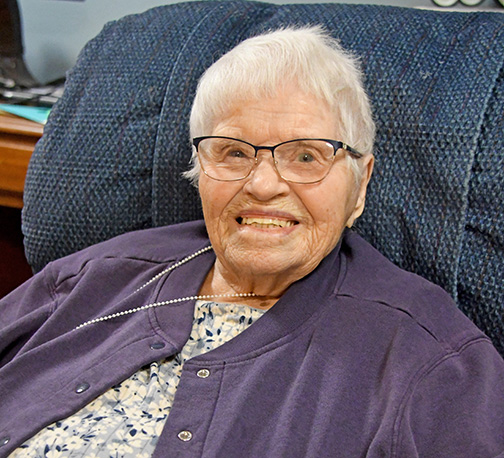
At age 101, Carol Robotham of Marquette now lives at Memorial Community Care in Aurora. She vividly recalls her growing up years at Pleasant Dale in Seward County and the hardships of the “Dust Bowl” years of the 1930’s and the Great Depression. The U.S. entered World War II when she was just 18, and after teaching school for a couple of years immediately after high school, she decided to do her part for the war effort when she turned 21 and became of age to join the Women’s Air Corps.
According to the Air Force Historical Support Division, the Women’s Army Auxiliary Corps (WAAC) was formed in May of 1942 to provide women to fill office and clerical jobs in the Army in order to free up men for combat roles. In the beginning those women were not given military status, but with the early success of the program, by July 1943 the WAACs were converted into the Regular Army and became known simply as WACs (Women’s Army Corps). Some of these women were assigned to the Army Air Forces (AAF) which would eventually become the USAF.
These women, which included Robotham, were known informally as Air WACs. Like Robotham, most of the early recruits were assigned office duties, or worked to operate listening posts for the Aircraft and Warning Service, which monitored U.S. borders for possible enemy attacks. At its peak in 1945, the program was more than 32,000 women strong, with young women working in more than 200 enlisted and 60 officer occupational specialties.
Robotham said when she got on the train in Nebraska in 1944 at the age of 21 to go to basic training, she had never lived anywhere with an indoor bathroom. But that was just the first of many changes she would experience over the next two years.
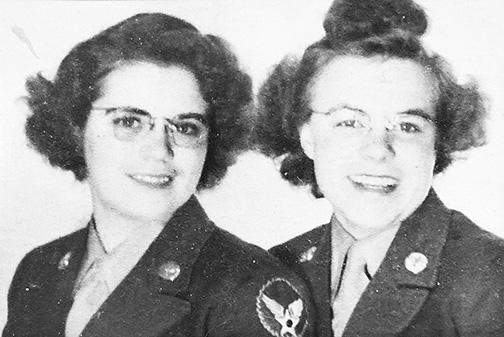
On the way she would also meet the woman who would become her roommate during her service as well as her lifelong best friend. On the train taking her to basic training, Robotham looked at fellow recruit, Emily Solem from Minnesota, and couldn’t believe her eyes.
“She and I looked so much alike,” Robotham recalls. “It’s like we were twins. We looked more alike than I did with my sister.” (Robotham still displays in her room at MCC a black and white picture of the two of them from their WAC days and, indeed, the resemblance is striking.)
The two young women became fast friends and roomed together during their service and have also kept in touch down through the years. Not only did they correspond by letter, they often visited each other, even though Solem, who passed away last year, eventually settled in Missouri. Robotham said that relationship was the best thing to come out of her service in the WACs as far as she is concerned. When asked what basic training for the WACs was like, Robotham responded by saying “We learned to march, and many of the girls learned to smoke.” However, she said she was not one of them.
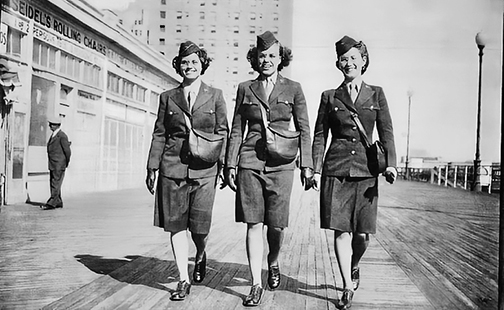
Robotham’s first assignment out of basic was in Atlantic City, N.J., which she admits was a big change from her Nebraska upbringing. Having learned to type as a civilian, she said her work consisted mostly of typing and her job title was “clerk typist.” She recalls being housed in a hotel and walking the famous boardwalk to the building where she worked.
According to one article, there was a huge military presence in Atlantic City during the war and at least 45 hotels were leased by the government to house the workers. Known officially as the “Atlantic City Training Center,” the military presence in the city was so strong that it became known informally as “Camp Boardwalk.”
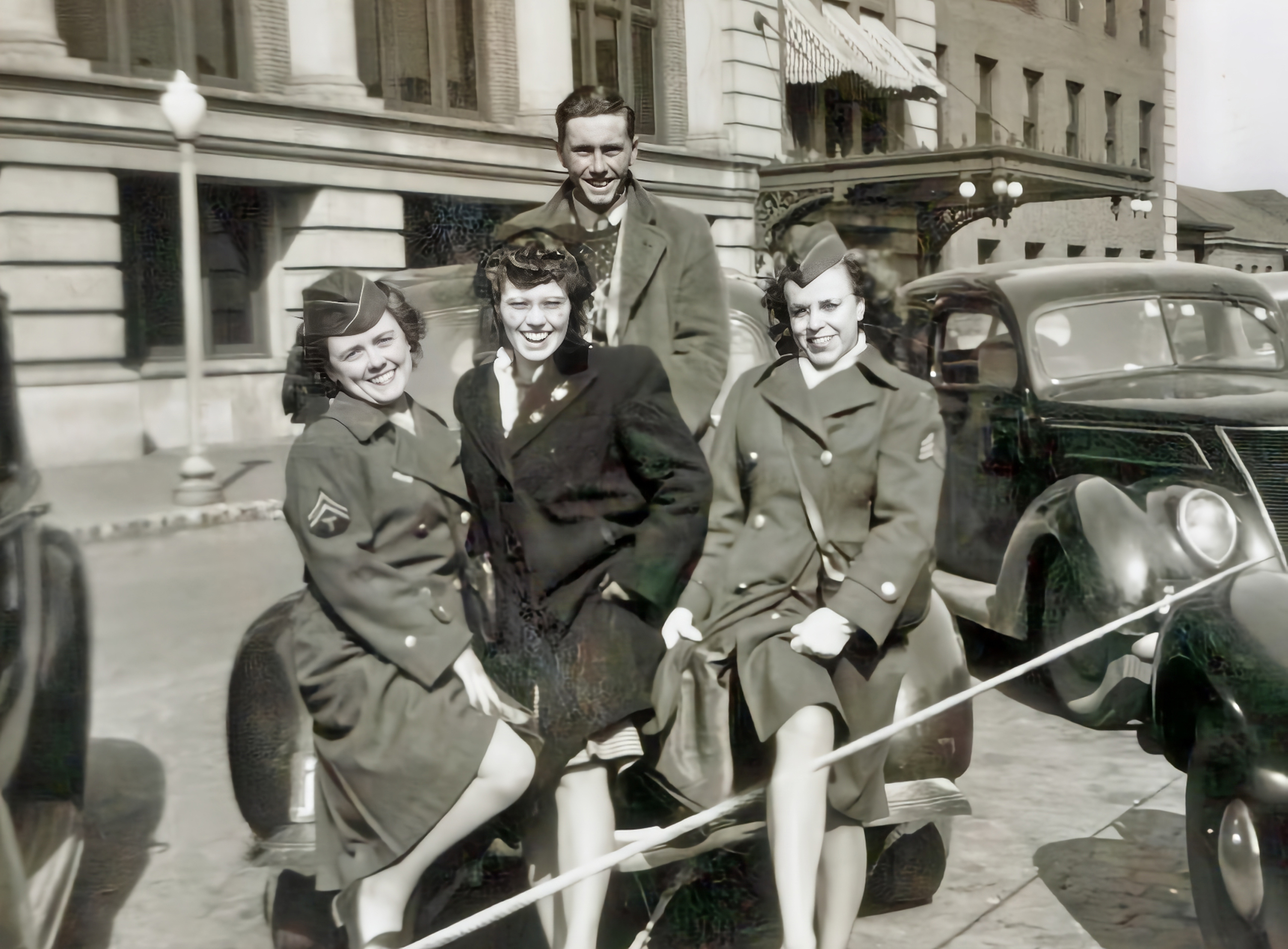
Following her second assignment in Louisville, Ky., and the end of the war in 1945, Robotham’s enlistment was up and she returned home to Nebraska. Having met her future husband, Plin Robotham, while she was teaching school in the years immediately following her high school graduation, she says she came home to get married. Carol and Plin were married on March 10, 1946 and in 1954 they moved to Marquette where he worked on a dairy farm and eventually went on to own a dairy farm in 1988. They became parents to four children and Plin passed away in 2000 at the age of 76.
Robotham says during her time of serving as a WAC she had the sense that she was helping with the war effort, but admits, “I was having fun, too... It was a great adventure and I loved every minute of it!”