
Esslinger bags 6x6 elk, lasting memories in AZ
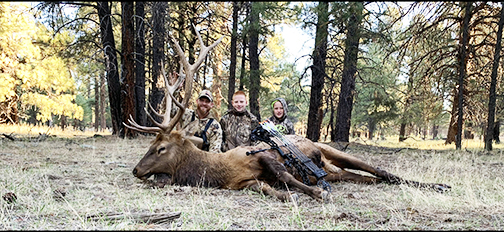
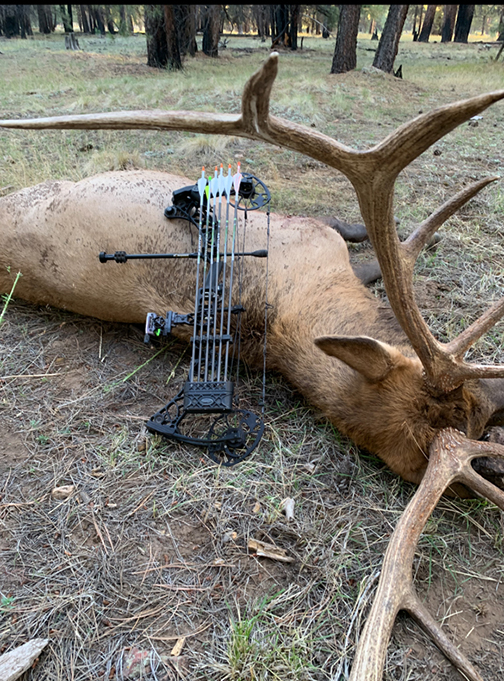
It’s not the shot he made with a bow and arrow from 52 yards away that Phil Esslinger will remember.
It’s not even the 6x6 set of antlers he kept from the bull elk he harvested last month that he’s most proud of.
Without question, the memory he’ll cherish for years from his successful elk hunt in Arizona is the opportunity to see his two young sons experience something he loves for the very first time themselves.
“I love chasing elk, and I just love bow hunting,” Esslinger began as he sat down to share the latest of his many hunting adventures. “But you know, as you get older you enjoy things differently, so seeing the younger generation, my boys, get all excited during this hunt you kind of remember your time doing that. That’s super fun to see some of that now in my 40s.”
The Nebraska native compared his change of perspective on hunting to being a Husker football fan, drawing similarities to the way people appreciate something they are passionate about.
“Your love in the excitement changes, you know, from a 20-year-old Husker fan painting his chest in the stadium to that 50-to-80-year-old who just enjoys the game,” he said. “My love of the hunt is different now. I could care less about myself shooting it. Sure, the bull I got is super nice and most people would put him on the wall. I enjoy the horns, but I don’t care, not like the 20-year-old, or that Husker fan in the 90s. Now, I just love going to watch the Huskers execute. Yeah, good job! We’re not quite the 90s team.”
Esslinger’s love of the great outdoors is focused mainly on hunting. His parents never had time to fish in the summer months so he doesn’t understand the fishing game, thus all his outdoor energy is focused on the next hunt.
“Hunting is what we did,” he recalled. “We took vacations hunting, so that’s what I grew up with. I love things you can call in, you know, so if it’s waterfowl, duck hunting or turkey hunting in the spring that’s super fun. So elk, naturally, they’re almost like a turkey, but you usually have to go to a mountain and they can be hard to get to, which makes it difficult.”
Arizona tag
Esslinger cleared time away from his business — Esslinger Physical Therapy — for 10 days in September after learning that his name had been drawn for an elk tag in Arizona. Though he’s been applying for years, the odds of being drawn as an out-of-state applicant are low, he said, so when his number came up, he was all in. And so too were his sons, Easton and Oakland, ages 13 and 11
“They’ve hunted with me quite a bit and harvested turkeys, deer and a lot of ducks, but they had never heard an elk,” Esslinger said. “I’ve been around it for years and when you hear that elk out there, that’s pretty fun. You can’t help but think, wow, that’s impressive.”
So after watching the Husker volleyball team defeat Utah in four sets on Sept. 12, Esslinger and his sons set off on their adventure, beginning with 17 straight hours behind the wheel for the only one of the trio old enough to drive. He had decided to skip the chaos of archery elk season on opening day, which he had witnessed while helping friend Wade Regier on a similar hunt the year before.
“It’s a big picnic, camp-out type of fun deal, so it’s kind of psychotic that first weekend,” he recalled. “After that first week, it was like a ghost town.”
Tired from the drive but pumped up on adrenaline, Esslinger set up a base camp and headed out with the boys that Saturday evening to get the lay of the land.
“We saw some cows, but nothing great,” he said. “On Sunday, we called in a dink of a bull, but I wanted to harvest something that’s a little nicer.”
That’s when his memory of hunting in a unit nearby the previous year and the research he’d done on elk behavior helped Esslinger come up with a game plan that worked almost to perfection.
Water is king
“In Arizona it’s a little different, because water is everything,” he explained. “If you don’t have water, you’re dead. I don’t have a guide telling me like this is where the elk are. It’s all public land, essentially. There’s this one little ranch that’s like 120 acres, but they’re running cattle on it so we start checking the tanks that they have.”
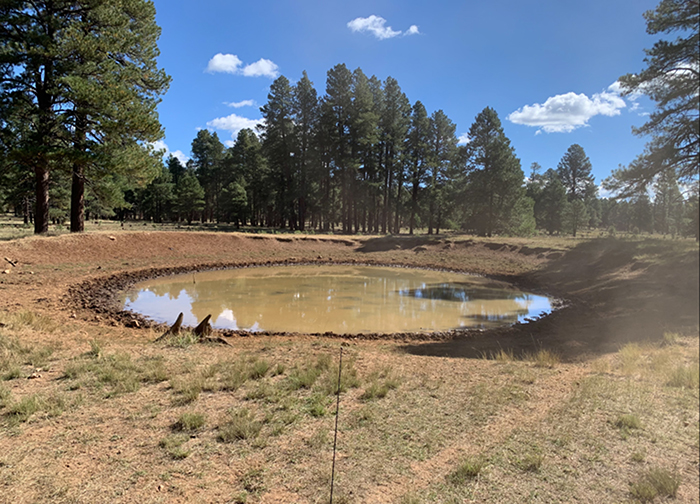
Water tanks, as they are called in that part of Arizona southwest of Flagstaff, are basically areas that are dug out by farmers and ranchers and then filled with water to function as cattle ponds. Cattle graze in that area for a month or more while they graze the land, then are moved to another area where a tank is slowly drug into place and dumped. Esslinger initially thought the water tanks were too easily accessible to four-wheelers and humans, but observed the year before on Regier’s hunt that in fact the odds of elk finding their way to an easy water source were pretty decent.
“Those elk love that heavier timber for the coolness, because they don’t like the hot,” he said. “Predatorwise, they love to be two-thirds of the way up the hill or mountain, because they can smell predators where they’re at. So we started horsing around finding water, barely getting the lay of the land.”
On Monday morning, the boys were both exhausted from the long-trip and first day of hunting, so they slept in. Esslinger went to the top of a mountain and listened for bugles, hoping to see or get a better sense of where the big elk might be.
“Elk aren’t like deer,” he explained. “They’re not going to come to the same spot twice, and they are like a glorified horse in that they can move faster than you can move, so you’ve got to go find them. It’s also nothing for them to travel 10 miles, so they love to move.”
Esslinger found a nice spot and began calling, which drew interest from some cows and a few small bulls, as well as another hunter.
“That was kind of fun,” he laughed. “He thought I was real (as in an actual elk), but I could totally tell it was another hunter, so I kind of had fun with him. I’m thinking, I’m not real, but I like the way you think.”
By Monday afternoon, the boys were rested up and raring to go, and right away they spotted a heard of approximately 75 elk. The landscape made it hard to move, however, and eventually the trio scared off their prey.
Esslinger described the landscape as very tall pine, without a lot of underbrush, which can create a sense of claustrophobia for someone used to the wide open spaces of Nebraska.
“I need to be able to see, so what the heck,” he said. “That doesn’t favor my style of hunting the best, so when we tried to make a move we bumped them. They smelled us.”
When that mountainside strategy didn’t work, Esslinger decided to check out a nearby water hole.
“Nobody was hunting it,” he noticed. “It smelled like hell, because elk give off a smell to themselves. You could smell the male elk from peeing around there for territory, so I was like, let’s just sit here and have lunch and just enjoy.”
So father and sons sat quietly as a few cows came in for a drink, and suddenly they were joined by a nice size bull, a 6x6 focused on herding his cows and getting a drink for himself.
“He just came walking right along there,” Esslinger said, still almost in disbelief a month later. “I would not have sat at this water hole if it wasn’t for Wade’s hunt the year before because somebody with a four-wheeler could drive right by there at any moment, just like I did. That’s dumb. Whitetail would not do this.”
But they weren’t hunting whitetail, and this was Arizona, he reminded himself.
“So I slipped out, snuck up on the edge there and fired a nice little heart shot, a perfect shot,” he said. “I heard a sound like a watermelon getting hit, which is a good sign that you hit chest cavity. He takes off running like a banshee, so I marked the spot on my hunting app.”
Not able to see the animal as it was getting dark, Esslinger instead started searching for his arrow, which he spotted sticking straight up in the water hole.
“I shoot a white fletching with white wrap, and I can see that it’s red,” he said. “Beautiful red blood. That’s a heart shot. That’s where the blood was telling me it was a heart shot.”
Not wanting to take a chance of spooking a badly wounded animal, Esslinger made the hard decision to head back to camp and resume the search the next morning.
“I didn’t want to track that night, because if you bump him, he can keep going,” he said. “Adrenaline can make you do all kinds of things, and that’s what you’re trying to avoid by leaving him. But thinking about it overnight can stir a lot of questions, like what really did happen, because it happened in the blink of an eye. Are we going to find something, because every bow hunter has done that and then they don’t find their deer, which is a bummer.”
Early the next morning, the trio started walking in the general area where the elk had been shot, but did not spot any blood.
“I’m a long-time bow hunter, and I’m like, you can’t pump blood if you don’t have a pump,” Esslinger said, still convinced he had made a successful heart shot. “I’m like, ‘Alright Lord, where is he at?’ Then I looked up and he’s right there, dead. He had died that night. That little mark I had made the night before (with the app), I was literally 10 yards off of where he died.”
Mission accomplished. Tag filled!
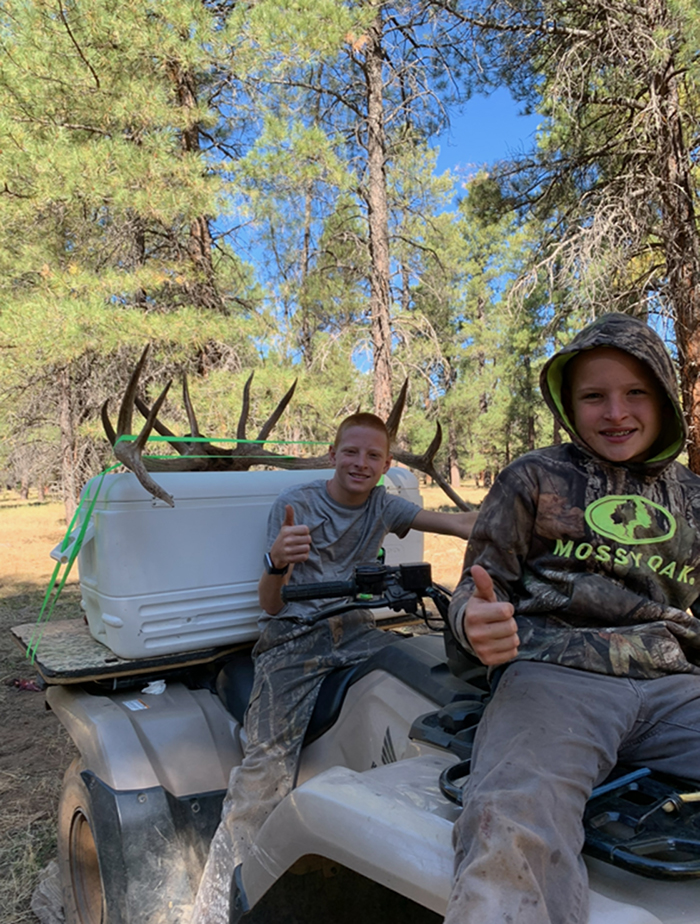
The trio then deboned the animal, packed up the meat in a cooler and 90 minutes later arrived in town where they put everything on ice. They headed back out to have some fun calling in another elk, then hit the road for another 17 straight hours of driving back home to Nebraska.
A month later, Esslinger was still bristling with details about the experience, not so much the shot or the critter.
“He’s a 6x6, which is a nice bull,” he said. “There are way bigger, but he won’t go on my wall. For me, the highlight was having my boys there for the adventure, seeing the young men and their excitement, helping me cut it up and getting the meat out of there. That’s the adventure. They were pretty jacked up.
“At age 12 they can start applying in the mountain states and you know it’s all about time,” he continued. “That took me five or six years, whatever, to draw, so they should start applying now. They’re like, ‘We’ve got to apply,’ so they are all about it, which is fun.”
The 6x6 ended up as about 700 pounds of roasts, steaks, summer sausage and jerky sticks, with help from the Aurora Meat Block.
“We just have a ton of meat, so we’re full at the Esslinger house,” he said. “No lack of food there. We had a roast last night and it tastes phenomenal. It tastes like cow because all they eat is grass. They don’t get that venison/deer flavor.”
With another epic Esslinger hunt captured in stories and photos that will no doubt be shared for years, the father of the house realizes that his perspective has changed, and he’s just fine with that.
“I always love to harvest something, which is fun at the end of the day because there are a lot of people that go to the mountains and chase elk and they’ve never seen an elk,” he concluded. “I was so blessed to be able to learn the elk hunting game and then, you know, find it, then be able to capitalize on it with the boys. Now that was fun!”