
Council approves use of city property along Old Creek Rd.
A proposed inclusive playground for Hamilton County has found both a home and a non-profit partner that will help design and find funding for the facility.
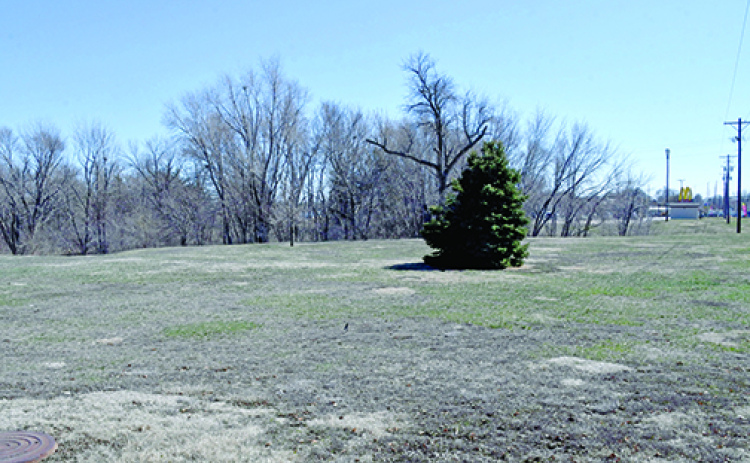
Cami Knust of Aurora, who heads the group behind the idea, spoke before the Aurora City Council last week and presented the plan as it stands now, asking the council to allow the use of an undeveloped area along Highway 14 across the creek from McDonalds for construction of the facility. The acreage adjoins the Leadership Trail and runs parallel to Old Creek Road.
The council gave its approval for the use of the city-owned property and agreed to maintain the park once it is built using donated money.
Knust also reported that the group, which involves Mariah Sorenson, Jennifer Heiden and Kim Eberly among others, has partnered with the non-profit organization Unlimited Play, which was instrumental in the building of an inclusive playground in York. Knust said the organization will help with the designing of the facility as well as providing assistance with fundraising and grant writing. Knust said they learned about Unlimited Play through talking with Julie Hoffman, who was one of the leaders of the York project and now works for the organization.
Knust gave an update to the council on plans for the proposed 25,000 square foot facility designed so that children with developmental disabilities can play together with able-bodied children in a safe environment on equipment designed to meet the unique needs of the disabled.
As detailed in an article in the Feb. 28 edition of ANR, plans call for the playground to be fenced for the security of those playing inside and will be equipped with wheelchair-friendly surfaces, such as ramps and rubberized matting, and handicap accessible equipment such as zip lines, roller slides and deck edge markers for the benefit of those with visual impairments.
“It’s really just going beyond the basic ADA requirements,” Knust told the council. “That allows everyone to be able to participate in play. It will promote social inclusion by giving our kids with disabilities a real opportunity to interact with their peers. In that interaction they can learn about each other’s differences and become more accepting of those differences, and that’s teaching inclusion. It will create a space for imaginative and creative play for everyone to participate in.”
Toward that end, Knust said the group wants to provide opportunities for “parallel play” in which children of all abilities can play side-by-side with other children.
“In our design, we are trying to consider all individuals,” Knust said. “So, not only individuals with physical or orthopedic impairments and who use mobility devices, but we also want to create a quiet zone area for those kids who may get overstimulated and just need a place to go and calm down or regroup before they can come back and play. For individuals with speech and language impairments, we will be providing communication boards to help them communicate.”
Restrooms will also be included as part of the plan and Knust said the group hopes to provide adult-size changing tables in the restrooms.
“This is important to us because (some) kids and young adults... have outgrown the typical infant and toddler changing tables you typically see in most restrooms,” Knust said. “They aren’t able to use those and a lot of times families are putting these kids on the ground in the bathroom to change them or they’re using the backseat or the trumk of their car and so we just want to try to uphold dignity for those kids and families.”
Knust also emphasized that the inclusive emphasis of the playground extends to the project’s support base as well, saying that there is support for the project from well beyond the city limits of Aurora.
“We have members from Aurora, Hampton, Giltner and Phillips and some of those members don’t have children,” Knust said. “Some of us are parents with kids who have disabilities and don’t have disabilities, and we have grandparents.”
She also said the group supporting the project also includes medical and educational
professionals who “have knowledge in the growth and development of kids and young adults.”
Following the meeting, Knust provided further details about Unlimited Play, which is a Missouri-based non-profit organization that has assisted in the building of inclusive playgrounds around the country since its inception in 2003.
She said in addition to helping with the design and fundraising for the facility, the organization also offers assistance with publishing sponsorship catalogs and brochures, educating the steering committee, developing a 3D fly-through video of the playground and designing a web page for the project.
Knust said the current cost estimate for the project is $1.5 million, which is based on the cost of the York playground. She said while the committee has not asked for funding from the city, it will not close the door to any such help suggesting that the city might help by applying for government grants for the project.
The project has already received administrative assistance from the Hamilton Community Foundation, according to Knust.
“We’re using their nonprofit status to fund raise and we have an account there with a link to their website to donate,” she said. “So people can get on that website and and donate if they want to.”
Those wishing to donate may visit the HCF website (hcfne.org) and click on the “Donate Now” tab at the top of the page, then click on the “Donate” radio button for “Hamilton County Inclusive Playground Fund.”
Having secured a location for the playground, Knust says the group will now move forward with the next phase of the project.
“We have contacted Julie with Unlimited Play, letting her know that we have the site,” she said. “And so then we will just move forward with design, whatever that looks like. I know she has talked to the designer and they’ve started some things on their end, so I’m just waiting to hear back from them on what more they need from us.”