
Giltner school bond issue hinges on vote

Subhead

Two more public meetings will provide info before election
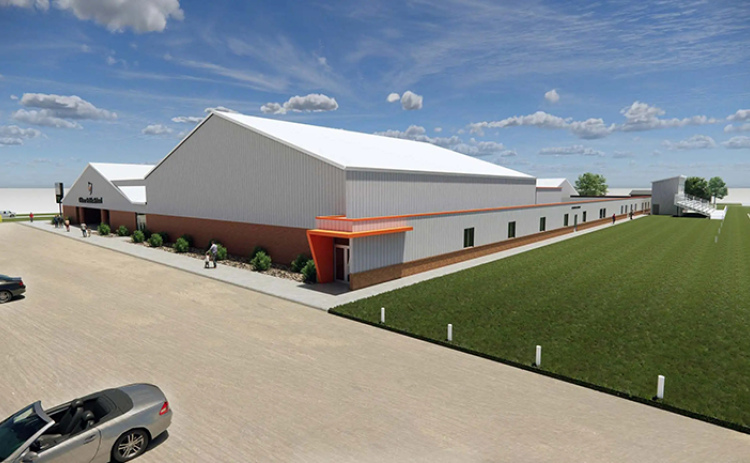
Voters in the Giltner School District will decide during the May 14 Primary Election whether or not an $11.4 million bond issue will go forward to finance major upgrades to the K-12 school’s facilities. 
School officials say the expansion is needed to prepare for expected increases in enrollment in the 2026-2027 school year. 
“(We get) a lot of questions on why we need this space or what this space will be used for,” Giltner Supt. Nick Mumm explained. “We have some larger classes coming up. Some big daycare learning classes here in a couple years are set to take place and Giltner is probably over that kind of desired limit in kindergarten.”
Originally set back in November at $16.9 million for renovations to the main building with an additional $4.8 million for a new track and football field, the bond was later decreased to $11.4 million to fund the changes deemed necessary by the school board.
“We’ve worked and worked and we’ve listened to our community,” said board member Logan Rath. “We went back to the architect and we’ve got down to brass tacks to necessities. I think we’ve squeezed all the extra out of this. I’m really happy with this. This is the best bang for our buck.”
The bond cost of  $11,415,000 has a projected  29.3 cent levy impact, with the expectation of $287.50 a year on a $100,000 property valuation and $12.63 per acre on irrigated land as reported at the February school board meeting. 
“What they’ve gotten it down to as far as facilities is great for our students and staff for what they need for opportunities,” Mumm said. “The board called on $11.415 million and said they were comfortable with that amount. They’re comfortable with that and I am as well, and it will be up to the voters how comfortable they are.”
Mumm said the impact of the bond issue on taxes will be addressed in detail at upcoming community meetings in advance of the election. 
“There will be more information on tax questions and about property taxes, those things will be honed in on a little more,” Mumm commented. 
“When we voted on the bond issue, the funds will not exceed $11,415,000,” Rath added. “We are guaranteed that is our cap.”
Should the bond pass, officials say the project will be assisted by a grant from the William and Ruth Scott Family Foundation of between $300,000 and $400,000.

Proposed renovations
Mumm said one of the reasons for the upcoming meetings is to share the rationale behind the school’s expansion plans. 
“I know that’s a topic already, but we’ll dive into it even deeper now that the bond is officially called for,” he said.
School officials say the primary focus of the renovation plan will include the expansion of classrooms, adding new locker rooms in the main gym and a new school kitchen.
While accommodating growing class sizes, officials say the expansion will also provide space needed for classes such as high school English, which currently is held in the school’s media center. English will be given its own classroom.  The science classroom will also be renovated to allow for more hands-on activities. 
“(Community members) asked a lot about where teachers work now and where are they teaching our kids now,” Mumm said. “A lot of times you’ll walk down the hallways and we’ll have support staff and teachers, depending on the situation, that will be in the hallways or sitting out at a table in the corner of the hallway or someplace like that where’s it’s obviously not best for learning. As our kids get older and as education evolves over the years, it’s just a different a way of learning now.  (We want to be) ready to provide those opportunities for our kids that come here to learn and be educated and we want our staff to have everything they need to give them those opportunities.”
In addition to providing additional classrooms for the district’s PreK-12 classes, the plan also includes three new classrooms for Little Stingers Daycare.
“It’s important to our school,” Mumm said. “Early childhood intervention is important to learning. This is where we are in our education system. A lot of those kids end up coming to Giltner for school. It’s a great way to get them in here and build relationships with them and their families and then they have a lot of them staying to go to school.”
Because of the lack of space in the school building a number of classes involving 15 staff members are currently held in modular classrooms located adjacent to the school.
Mumm said some community members have questioned the need for a new kitchen.
“Right now our gym’s pretty much off limits three quarters of the day between breakfast and lunch and set up in the lunch room is small,” Mumm said. “Billie (Linden, the school’s cafeteria manager) does a great job with what she does and everybody knows that, but she would have more opportunities to serve and provide for our kids (in a larger space).”
Mumm said relocating the kitchen to the north side of the building will also provide a new concessions area closer to the main gym and football field which would be accessible through a new corridor that will be built on the northwest corner of the school.

Construction timetable
If the bond issue passes in May, Mumm said it would take two to three months for the board to finalize everything before construction can begin.
“I would say the best case scenario, they probably wouldn’t get started until November,” he said. “They’ve always told us somewhere between 12 and 18 months to get the full project completed.
Whenever renovations take place during school hours, the school board will have the construction fenced off to prevent students or staff from entering the area.” 
“In talking with our construction manager and architect, they felt very confident we can structure our construction schedule so as we have very minimal disturbance of our current schedule,” Rath stated. “They have done a lot of projects, so they felt very confident that it wouldn’t be an issue.”
While it appears the construction won’t impact class schedules, there is concern about the effect on extracurricular events. 
“(For) football, we would have to make sure we have that separated for football games and stuff out there still,” Mumm stated.
Another question is where to put daycare students when the current modulars are moved in preparation for construction.
“The early childhood buildings (are) going to be relocated for a period of time until that part would be built,” Mumm said. “That would be the biggest challenge of where those are going to go and get hooked up for the temporary times.”