
Giltner and Harvard schools join forces in wrestling co-op

Subhead

Shared goal is to increase opportunity for student/athletes
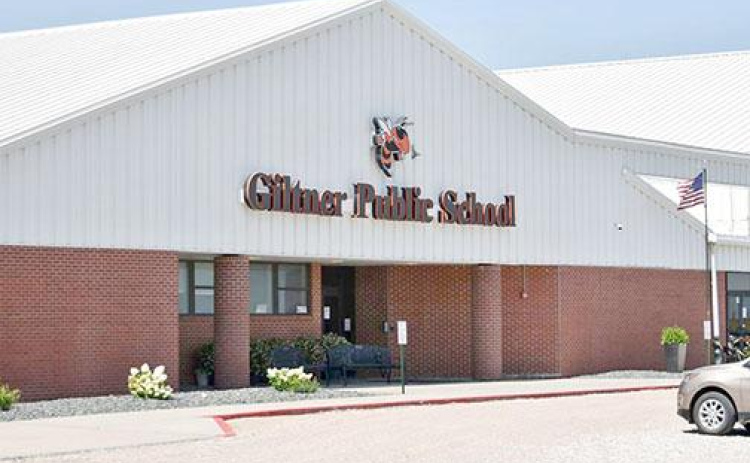
The Giltner School Board approved to form a co-op wrestling team with Harvard Public Schools last week, making wrestling an additional extracurricular for Giltner High School students, according to principal and athletic director Kurt Finkey.
“We’ve had a couple students from Giltner express interest in wrestling, boys and girls,” Finkey commented. “I would like to see if we have three or four kids, girls and boys wrestle, then if that’s a success for us it gives kids the opportunity to participate in the activity in the winter.”
The discussion for Giltner and Harvard to establish a co-op team started in the fall of last year with wrestling being the latest addition to the schools’ efforts to provide more opportunities for student athletes at both schools. The goal is to increase student participation in wrestling as well as junior high co-op sports such as football, volleyball, basketball as well as wrestling. 
The agreement established by the schools will be in effect for the 2024-2025 and 2025-2026 school years for wrestling. For junior high sports, the agreement will be on a year-by-year basis, but both agreements have the possibility of being renewed if there is continued interest by students to participate in their respective sports.
Harvard Public Schools athletic director Brent Williamson explained that the idea of team expansion stemmed from Harvard’s decline in boys wrestling, as well as its addition of a girls wrestling team after the Nebraska School Activities Association added that sport in 2022.
“We would have 12 kids out for wrestling and the last couple of years we have been down to three, four, maybe five kids,” Williamson explained. “It’s pretty hard to have any kind of practice, because everybody’s from lightweight to heavyweight.” 
Finkey also noted that the struggle for numbers extends to junior high teams.
“We don’t have enough numbers for junior high football and they really struggle for numbers in junior high volleyball,” Finkey explained. “It made sense for us to combine so both teams can have the option to play more than just like an ‘A’ team only.”
While developing a plan for co-op teams for the upcoming school year, concerns were aired by parents of students from both Giltner and Harvard that some kids would experience less playing time in their sports. Williamson stated that without the agreement made by the schools for the co-op, it would be difficult to impossible to maintain involvement in all sports.
“When you’re limited with your amount of girls and you only have like, seven or eight girls out for basketball, it’s hard to practice,” he said. “Now with both schools, we’re looking at 14 to 16 (athletes). We can have full practices, we can play full ‘B’ and ‘A’ games in both volleyball and basketball. So actually, kids get more playing time and a lot of people overlook that.”
Without the co-op, Finkey said it would have been difficult to near impossible for Giltner to keep its junior high sports program.
“There might be some people that are confused as to why we would do this and it basically comes down to opportunity for kids,” Finkey stated. “I’m 95 percent sure we would not have a junior high football team if this didn’t happen, so this gives our kids the opportunity to play and also play at a level they’re comfortable with instead of having small seventh graders against eighth graders.”
Williamson assured that even with the increase of students on the designated teams, every student will have the chance to play.
Along with more playing time for students, Finkey said students who no longer wish to participate in their winter sport or activity can now have the opportunity to try out for the new wrestling teams.
“I’m hoping some girls that wouldn’t play basketball might take the opportunity to wrestle and see if they enjoy it,” he said.
While the numbers are not set in stone, Williamson projected each team could have about 15 students participating in the junior high sports with Harvard and Giltner being able to provide players in the sport that the other school may lack.
“We anticipate probably only six or seven girls that will go out for volleyball,” he said. “We’re just really short-handed with girls in seventh and eighth and I think Giltner is going to have probably 14 or 15 girls. Then on the boys side is just the opposite we’re anticipating. We’re going to have between 14 and 16 junior high boys out for football in Harvard and I think Giltner is going to have around that seven, eight, maybe nine figures.”

Practices in Harvard
Due to Harvard having the mats and equipment needed for wrestling, all wrestling practices will take place in Harvard for the first year.
“If it takes off and if we have a lot of kids interested, then we’ll have to cross that bridge later and see if we need to put stuff in our own building,” Finkey said.
Harvard wrestling coach Terry Owens will be taking Giltner students under his wing as they improve and grow with their teammates.
“With a lack of experience for some, this should let them develop at a good pace,” Owens stated. “More numbers in your wrestling room is always better to help one another get better. I just hope everyone will have an open mind about it and know it is a process.”
For the junior high practices, Finkey stated the schools will alternate in hosting practices in its facilities, with the schools providing transportation for students to practice with their coaches, if it’s away from their school.
“We haven’t quite scheduled the first practices yet, but the majority of games are going to be shared,” he commented. “The majority of the practices for football and volleyball will be shared as much as possible. We’ll make sure we have that all posted when we get it said and done, but we want to make sure we’re as equitable to both schools as possible.”
Schedules for the upcoming 2024-2025 year have been completed, with the schedules currently in the process of transferring from Crossroads Conference (CRC) to the Twin Valley Conference.
Williamson commented while the schools adjust to its extracurriculars for the upcoming year, patience will be crucial to helping students, coaches and faculty develop a routine that will bring success for both Harvard and Giltner.
“I think it’s going to be beneficial for both schools,” Williamson said. “In the short-term and the long-term, people just have to be patient because this is basically the first time through for both schools and there’s going to be some things that Mr. Finkey and I both overlooked or forgot, but we’ll make adjustments as we go.”