
Rollie Carter remembered for his role in developing a winning culture here in Aurora
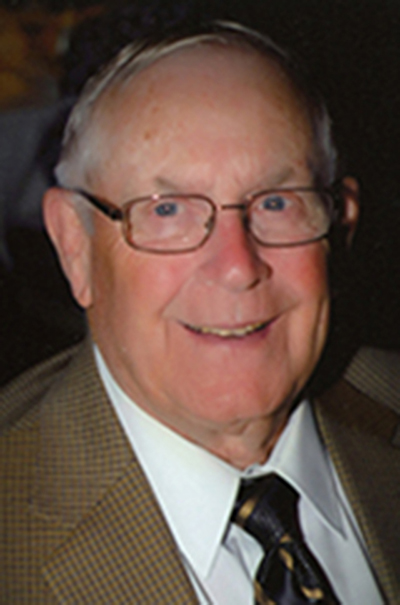
Rollie Carter was tough but fair, according to so many who worked with him and attended Aurora Public Schools during his tenure. He raised the bar of expectations for everyone around him and is credited for helping create a winning culture.
Carter died Thursday at the age of 84. His funeral was Tuesday, and a full obituary appears on Page A6.
Carter left an lasting impression on thousands of students over the years at AHS, whether it be on the football field, track or classroom. Many have their own stories to tell, including Pat Shaw, a 1982 graduate and current Aurora 4R School Board president.
“Rollie Carter was a great principal and was very interested in the students of Aurora Public Schools, in school and after graduation,” Shaw said of his friend, mentor and coach. “He would always ask you how things were going and he was always there to help.”
Shaw recalled that Carter motivated everyone in a different way.
“He would spend countless hours helping different students with different events in track,” he said. “He would spend time and help someone if he thought that he could add to their performances, which he always had good advice to share.”
Even after students graduated from Aurora, Carter kept close ties in any way possible, and Shaw was no exception.
Shaw left Aurora to attend the University of Nebraska-Lincoln and played football for the Huskers during the 80s before moving back to Aurora. Carter spent his retirement years working in his basement on golf clubs of all things. Shaw was never shy about asking his old mentor for a tune-up.
“As I got older I was able to have Rollie fix a few golf clubs for me and he would always make jokes about my golf game and then he would ask how the club became broke,” Shaw recalled. “Then somehow we would get to talking about everything going on now and go back to stories about high school.”
From football to track to everything in between, Carter was a mainstay at AHS for decades, shaping many minds like Shaw, which led to lasting relationships. Carter stayed in touch with the happenings at the school as well as those who stuck around the community after graduation.
“Mr. Carter was so proud of Aurora and the school and of all the athletes that had come through when he was a coach, teacher and a principal,” Shaw finished. “He was a part of the great history of Aurora Public Schools. He will be truly missed by so many people.”
Jack Guggenmos was a colleague and close friend of Carter’s who was asked by the family to deliver the eulogy at Tuesday’s funeral service. Guggenmos said he had great respect for the way his good friend led by selfless example, saying he helped create a positive culture which Aurora and Aurora Public Schools is known for still today.
“Sometimes I don’t think we in Aurora realize how well thought of this community is throughout the state,” he said. “I think so much of that reputation, for the school system and the community, is a direct result of the efforts of Rollie Carter. I’ve always felt the speed of the leader is the speed of the pack and I think Rollie is the epitome of that. He was at the forefront of developing that culture.”
Guggenmos recalled numerous examples of Carter’s leadership style, saying he was “the Enforcer,” so to speak, a guy who made things happen.
“He had such a high expectation level for faculty, for students, for parents, for fans, whatever the case may be,” he recalled. “And it wasn’t one of those things where he rammed it down your throat or anything, he just set a great example. You just knew Rollie had high expectations for everything you did and I think it made all of us better.”
Guggenmos was hired by Carter to be Aurora’s new football coach in 1978, six years after he stepped away from the sideline himself. Years later, he realizes that many of the people Carter asked to join the school staff had such a positive impact on the students, school and community, which was a direct reflection on Carter himself as AHS principal.
“I think one of Rollie’s real strengths was in hiring,” he said. “The faculty that was there at Aurora when I got there and the faculty that he hired while I was there was great. He had great, great people working in the system and I’m so glad my kids got to go to school there.
“It’s still home,” Guggenmos said of Aurora, more than 20 years after moving on, “and I am so proud of what Aurora does and how they do it. I hope in some way, shape or form people can understand how important Rollie Carter was to that, or is to that. I just think he was the person that set that in motion.”
Former elementary principal Jim Johnson, who came to Aurora in 1974 and worked with Carter for years, had high praise for his friend and former colleague.
“Rollie had served the Aurora schools as teacher, coach and assistant principal for several years,” Johnson recalled. “In 1974 he was starting as high school principal, replacing retiring principal Irvin Peterson. Bob Clay came that year replacing Rollie as assistant high school principal. One of the first things Sandy and he did was host all of the administrators for dinner. He helped make my entry to the Aurora schools easier. Through the 23 years we worked together he was always supportive and helpful.”
Johnson said he had heard about Carter’s coaching and way with students long before he arrived in Aurora.
“I was able to witness that first-hand through the years,” Johnson said. “Rollie was probably known best by the public for his interest in athletics, but he very much supported academic attainment. His pride in the numbers of his former science students who chose the medical field speaks to his desire for student achievement. Rollie was a good educator. Aurora was very fortunate to have him teach and influence our students for so many years.”
Players honor their coach
Back in 2018, the 1968 Aurora football team was honored by the Nebraska High School Sports Hall of Fame as the Golden Anniversary team for its state championship season.
“Fifty years later, it’s nice recognition, but I believe the award isn’t about us, but moreso for Rollie to be recognized as the coach of that team,” former player Dan Ernst explained in 2018. “It wasn’t just that team who was successful, but he made a big difference for a lot of lives as a coach and teacher. He’s getting some recognition he truly deserves.”
Former players Mark Gustafson and Skip Tredway had similar praise, noting that Carter came to Aurora and changed the culture to something that still stands true today.
Tredway had a different sort of relationship with Carter than Ernst, Gustafson or any other player on the team by being a two-year starting quarterback.
“The best thing I can tell you about that relationship is over the years we began to think alike,” Tredway said. “He’d send in a play and I had already thought of it.”
More than anything, the players from that 1968 team were happy to have their team recognized, but happier to see Carter get the attention they believe he deserved.
“The best part of being a part of a high school team like that is our coaches, whether it’s Rollie Carter, Bill Kropp or Junior Nachtigal. They brought a winning culture to the program and it permeated to other programs,” Ernst said at the time. “We prepared to win and expected to. That culture was something developed by the work ethic of our team and the coaches with their desire for us to be successful.”
Gustafson added that Carter and the rest of the staff insisted on giving your best at all times, holding your head high because of that.
“He taught life lessons that lasted a lifetime,” Gustafson said. “Most of us aren’t on the playing field very long. The hard work is the price you pay.”
Among his coaching accolades, Carter was asked to coach the South team in the 1969 Shrine Bowl. What few may remember is that among his assistants that year was Frank Solich, and one of the star players for the opposing team was future Husker legend Johnny Rogers.