
County’s valuation up 6.9% to $3.2B

Subhead

Local taxing entities now have base numbers to begin finalizing budgets
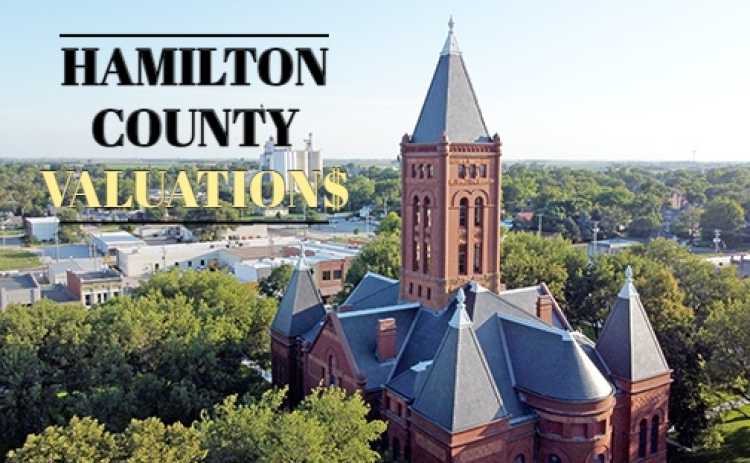
The valuation of property in Hamilton County rose by 6.9 percent in 2023, pushing the cumulative total to a record $3.26 billion.
Hamilton County Assessor Pat Sandberg reported this week that total valuations for all taxing subdivisions rose by $212 million in the last year alone, which she said is a significant sum in and of itself.
“Some of that increase is because I changed ag land values,” Sandberg said, noting that the price for an acre of prime 1A1 irrigated ag land went up from $6,100 to $6,550 earlier this year, a bump of 7.38 percent. The first acre of a home site for rural acreages and rural farm homes also went from $35,000 to $40,000.
“Plus we also had a lot of new growth this year,” she continued, reporting an increase of $24.1 million countywide. “That represents new homes, new garages, new buildings, new bins and just new construction overall.”
Another big factor countywide is the rising value of residential properties, which reflects a nationwide trend.
“Housing is still hot,” Sandberg reported. “Housing is still tight, so it’s good that they are having some new lots coming in with the new subdivisions for new housing because it seems like no matter where you are in the county — east or west or central here in Aurora — the housing is tight and the housing market is still pretty good, though it may be leveling off some. Rentals I know are hard to find.”
The time allowed for protesting property valuations has passed, with Sandberg reporting fewer than last year.
“We had 32 protests, with eight of those from KAAPA,” she said. “Two or three were withdrawn, so I was very happy with that because we revalued all of Giltner, I revalued some commercial properties I had missed, plus for 2023 I revalued all the multi-family properties here in Aurora.”
Looking ahead to 2024, Sandberg said she predicts that ag land values will go up again, based on recent sales trends.
“I’ve just had some really strong sales of ag land,” she said. “You’re going to have to change Nebraska statute if you don’t want to jump values more than 3 or 4 or 5 percent because it’s in the Nebraska statues where percentages are there for the assessor to be in compliance. So if I’m supposed to be between 92 and 100 percent on residential and commercial and the sales keep coming in showing that I’m at 70 percent I’ve got to raise those values and the lots to get in compliance, because if I’m not in compliance the Department of Revenue will make sure I am.”
Sandberg referred to 77-5023, the Nebraska statute that drives her office’s continuing efforts to stay in compliance.
“Ag land has to be between 69 and 75 percent,” she explained, “and when it’s low I have to get it up there based on the sales so that it’s in compliance. That defines the acceptable ranges.”
Having met the deadline to post official 2023 valuation totals, Sandberg said her office mailed letters out to all the taxing entities last week and has already begun working on 2024 values.
Now that Sandberg has certified the values, the various political subdivisions will use the data to establish tax levies as part of the budgeting process.