
Local school officials say non-sports activities make a long-lasting impact


The impact of high school extracurricular sports on schools and communities, especially small ones, is hard to measure. At certain times of the year, family calendars are planned around practices and games, travel plans are made for away games and the young athletes regularly get their faces in the newspaper for their exploits on the court or field.
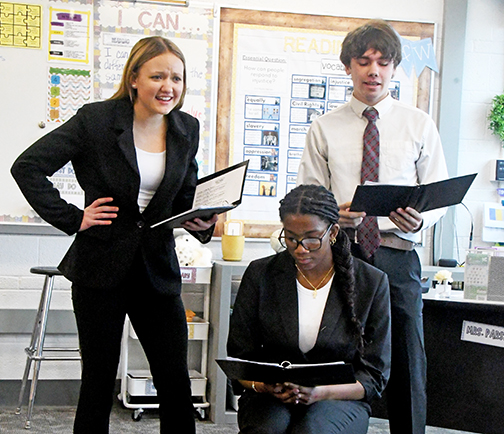
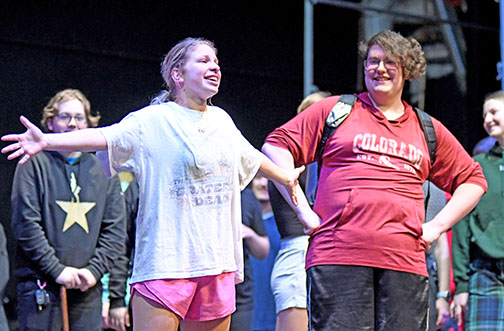
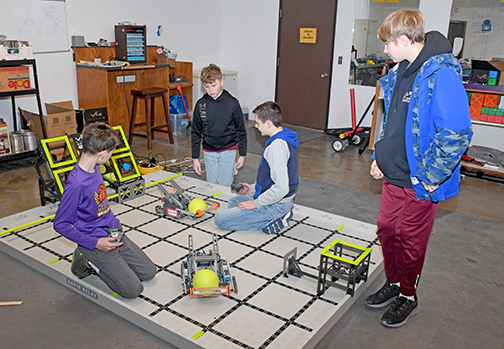
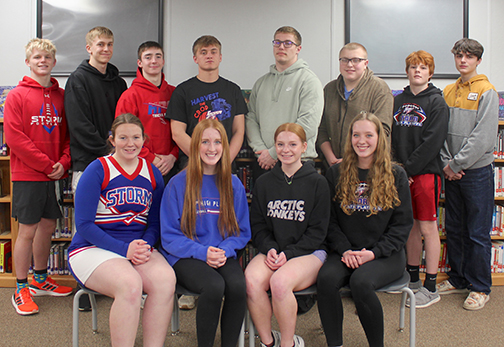
But what about those other school activities, those extra extracurriculars – activities like choir, speech, FFA, FBLA and those teams that engage in contests between drones and robots? What’s the impact of those activities on the students, their sponsors and the school in general? And shouldn’t those students and activities get their moment in the spotlight as well.
We here at ANR think they do, so we’re introducing in this issue our first-ever salute to “extra extracurriculars.”
In this inaugural edition we’re highlighting winter extracurriculars at our four local high schools including the music ensembles, speech and quiz bowl teams, FBLA chapters and theatrical performances that fill the schedules at those schools each year. A similar edition next fall will feature marching and concert bands, one act, choir, FFA and other fall extracurriculars.
As a lead-in to this special salute we wanted our readers to hear from administrators at local schools talking about the impact of those activities that don’t involve shooting baskets or making touchdowns. So we asked them for their thoughts about the differences those activities make that involve skills in fine arts, problem solving, engineering and public speaking among others. Here’s what they had to say:
Aurora High School
Aurora High School encourages all of its students to be active in at least one extracurricular activity or organization, so much so that Principal Doug Kittle says they represent “the other half of education.”
“Students who are involved do better in the classroom,” Kittle said. “They also learn life skills, such as commitment, teamwork, discipline, problem solving, conflict resolution, fund raising, public speaking, time management and the benefit of hard work. For AHS to be successful in anything we have to have all our students doing everything ... athletics, fine arts, clubs, etc.”
At AHS, a number of Career Service Organizations (CSOs) are offered, including FBLA, FFA and Skills USA. Kittle noted that CSO events help students build their leadership skills, giving them a platform to participate in skills competency events against students from across the state and nation.
“Our students have done a great job competing at the state and national level,” Kittle observed.
Fine arts opportunities also provide AHS students an opportunity to demonstrate their skills in vocal and instrumental music, drama and speech. Kittle said the Huskies have a strong reputation for competing at the highest level in fine arts events and competitions.
“It is rewarding to see them enjoy success on stage,” he said.
“These programs are only as good as the faculty adviser, teacher, coach that leads the program,” he added. “Our advisers, teachers and coaches put in a lot of hours before and after school to help our students be successful. Just like athletics, if students want to put in the time they will reap the rewards. The life skills they learn from being involved in activities will benefit them the rest of their life.”
Aurora has had numerous students find success at the highest levels of extracurricular activities over the years, including several state officers in FFA and FBLA. When asked to share an example of how someone’s educational experience was enhanced by involvement in extracurriculars, Kittle singled out Darci Vetter.
“I believe she was a state FFA officer,” he recalled. “Her resume is very impressive.”
Vetter has served as an international trade advisor on the United States Senate Committee on Finance. Prior to working in the Senate, she held numerous roles at the Office of the United States Trade Representative, including director for agricultural affairs (2005 to 2007) and director for sustainable development (2001-2005). Before that, she was a special assistant to the Under Secretary of State for Management (2000-2001). Vetter then served as deputy under secretary of agriculture for farm and foreign agricultural services (2010-2014)
On Dec. 17, 2013, President Obama nominated her to be chief agricultural negotiator
“We have had a lot of students over the years earn top honors at State FFA, FBLA and most recently Skills USA,” Kittle concluded. “I am a firm believer that extracurricular activities are the other half of education.”
Giltner High School
Kurt Finkey is not only the PK-12 principal at Giltner Public Schools, but he also serves as the athletic and activities director. Asked for his thoughts about those extra extracurriculars, Finkey responded by saying activities like speech and music are just as important to the school as athletics.
“They afford many kids the opportunity to excel at something they love,” Finkey said. “They give them a sense of pride and accomplishment. It also provides them with valuable life lessons and prepares them for life after high school.”
“I think here at Giltner we want to encourage kids to be as active as possible in all activities,” he continued. “Participation in these activities can build their self-esteem and strengthen their leadership skills as well as enhance their relationship skills for life after high school.
Finkey added that the power of extracurriculars is in their ability to help students grow and mature.
“Activities benefit students by fostering personal development through increased self-awareness, social skills and self-confidence, while also developing teamwork and communication skills, as well as improving time management and productivity,” he said. “Our hope and goal would be that participation in these activities will bolster their sense of pride and accomplishment. Extracurricular activities significantly support a school’s mission by boosting student engagement, potentially improving academic performance and fostering social and emotional development.”
While he was unable to share any specific stories of students who had benefited greatly from having participated in extracurriculars, Finkey said “I think there is a very strong connection between our leaders on the field and on the court in relationship to their contributions in the hallways as leaders.”
Hampton High School
Carson Klute, the principal and athletic director at Hampton High School agrees that sports get a great deal of public attention because they draw crowds and have that element of suspense and excitement. However, he believes other extracurriculars deserve attention too because of their long-lasting impact on the students themselves.
“Our other extracurriculars, the non-sport ones, will help shape and prepare students for the future, as much if not more than sports,” Klute said. “I think they’re important because they develop the whole individual. In sports, there’s such a focus on the team, which is so important, and I’m not devaluing that at all, but it’s so much on the team. But you know, when you’re singing a solo or giving a speech, it’s just you and you alone.
“So it really makes you grow, I think, as an individual, like mental toughness, when I have to get on stage and I have to sing in front of people,” he added. “That’s huge. That takes a lot of guts, a lot of courage. So to get up on a stage and sing or play an instrument or speak in front of people just develops the whole person.”
“It develops skills needed by everybody,” Klute continued. “Eventually every volleyball player stops serving a volleyball competitively and every running back takes his last hand-off, but everybody speaks, so developing confidence in yourself, to me, is vital for success later on.”
Another benefit of extracurriculars, according to Klute, is that they help students learn time management and prioritization skills, which will benefit them for a lifetime.
“Again, I don’t want to negate the teamwork aspect of sports, because that’s huge,” Klute said. “But (other extracurriculars) develop the person as an individual.”
“I’d say our philosophy at Hampton is just that each student should be able to participate in any school activity that they want to, and we want to encourage that,” he continued. “So at Hampton it’s been a standing practice for at least four decades that Saturdays in January and February are for speech. So aside from the conference tournament, which we don’t set, the date of every other Saturday is for speech. Basketball doesn’t play on Saturdays for that reason.”
As a former high school speech participant himself, Klute said he understands the lasting impact of participation in that event.
“It gives you such great skills,” he said. “And it’s just you up there. You have to get some inner courage to go and give a speech in front of people you don’t know. And it just develops things that you just can’t in other places. So that’s Hampton’s philosophy. We just think that’s part of growing the whole student. They talk about educating the whole student. That is the whole student, not just training them in lifelong learning, but lifelong skills.”
And Klute said when his students’ talents are put on display for the public to see, that’s the icing on the cake for him as a school administrator and parent.
“Nothing is more exciting to me than when just our kids are at our own Christmas concert,” he said. “When they get up there and they play an instrument, or they do a solo. To me that just is fantastic. It’s amazing! They do some phenomenal things and I love how they change. Sometimes speech is a big interest, but robotics and drones are huge right now, so I love that too.”
High Plains Schools
In his first year as superintendent at High Plains, Jason Brown also sees and celebrates the contributions of non-sports extracurricular activities.
“Other extracurriculars such as music, drama and speech are so important to schools because they give students another opportunity to participate and compete in activities,” Brown said. “These activities are just as important for school culture. They provide students an opportunity to get involved in other areas in which they may have talents, other than athletic ability. It is a great way for students to be showcased in all areas.”
Brown said HPC encourages students to be involved in non-sport extracurricular activities because they are “an avenue to be involved with another group of students and a way to display your talents. It also requires students to continue to show effort in the classroom to get good grades and keep their academics going at a good rate.”
Brown is also an advocate of the power of those activities, which often take place outside of school hours, to develop in students both time management skills and flexibility.
“This helps prepare them for completing tasks in the future, for jobs and college work,” he said. “The students must work individually and work as a team. The benefits of these activities are exceptional.”
“I have seen students find talents that they did not know they had,” Brown continued. “Students just need to be willing to try all activities and step out of their comfort zone and find talents that they might not know they have.”