
The big question: Will ‘DOGE hunt’ for spending cuts hurt federal ag programs?
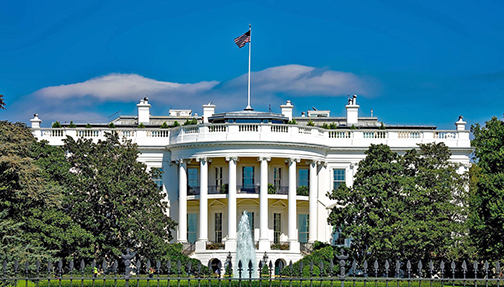
As President Donald Trump has begun his new term in the White House, he has been assembling a slate of Cabinet members and agency leaders to help enact his agenda and priorities for the months and years ahead.
Included in those ranks is a new Department of Government Efficiency (DOGE). Even if it doesn’t exist as an official government agency, it had been a constant campaign message and now appears to be an administration priority to reshape and downsize the federal government in terms of programs, workers and spending.
Some of the administration’s early actions already have elicited strong reactions from supporters and opponents alike, but the overall question remains about what the DOGE could do and what it could mean for many government policies and programs. DOGE by itself couldn’t substantially change government policies and programming, as major shifts would take congressional action, but DOGE could be an effective messaging strategy for budget cuts and shifting priorities, even if it doesn’t directly implement policy.
Not the first time
The DOGE efforts are not the first attempt to identify and propose government spending cuts and program reforms. The Government Accountability Office produces regular analyses of various policy issues and programs. Many of its reports focus on potential program changes that could reduce spending or increase the efficiency of government programs. In agriculture, those reports have included a focus on the federal crop insurance program and potential reductions in crop insurance subsidies or insurance company reimbursements, along with other issues.
Presidents of both parties also have recommended various cuts to programs as part of their annual budget proposals, identifying crop insurance cuts and farm bill commodity programs spending or payment limits as a means to reduce spending or save funds to prioritize elsewhere in the budget. An old adage, however, notes that “what the president proposes, Congress disposes.”
Ultimately, it is Congress that must pass budget, appropriations or authorization language to make program changes, including potential cuts, and what the president proposes often carries little weight on Capitol Hill. The same challenge would await any recommendations from DOGE, casting some doubt on the potential scope of any actual cuts.
This also would not be the first time Congress considered federal spending and deficit reduction priorities. Back in 1998, congressional action on welfare reform and strong economic growth helped pave the way to a federal budget surplus. Republicans remember the efforts of Newt Gingrich and the “contract with America,” while Democrats remember the contributions of President Bill Clinton in the consensus to reign in government spending and balance the budget. Alas, the budget surplus lasted all of four years before a return to federal budget deficits and the substantial growth in deficit spending over the past two decades.
Another attempt
Congress also tried to address budget deficits with the Joint Select Committee on Deficit Reduction in 2011. The super committee called on standing committees in Congress to find budget cuts as part of an overall deficit reduction effort. The agriculture committees stepped up to the task and proposed a budget-cutting framework for farm bill spending that almost led to an early farm bill in 2011. As it turned out, the agriculture committees may have been the only ones to actually produce proposed cuts as part of an overall effort that failed. However, the budget-cutting framework held for agriculture, and when the farm bill was finally passed in 2014, it included a projected cut of about 6 percent in farm income safety-net spending (commodity programs, standing disaster assistance programs and crop insurance programs) and 6 percent in conservation spending while even food assistance was cut, albeit just 1 percent, and the overall bill reduced projected spending less than 2 percent.
The current attention to proposed budget cuts and government program reforms is certainly a disruption to the status quo and promises an effect on virtually all sectors of the economy and society. Although there may be widespread support for government reform and budget cutting, the issue always becomes more difficult once specific programs and constituencies are identified for cuts.
Agriculture and rural America are very illustrative of this complexity. Although rural places have tended to vote very conservatively in national elections over time, with calls for reduced or limited government, they also have been major participants and beneficiaries of government programs related to agriculture, rural development and more.
A look at the poll
The 2023 Rural Poll in Nebraska included a couple of questions on farm bill programs and support. A breakout of the results showed that respondents with an occupation in agriculture were more likely than rural Nebraskans in general to support farm income safety-net programs, while they were less likely to support food assistance programs. That result doesn’t specifically implicate agricultural interests as being more narrow-minded than others, as it may generally be expected that the public at large tends to support the programs they see or receive direct benefits from and tend to oppose spending on other programs.
It remains to be seen if the DOGE proves to be something more than an effective messaging strategy for budget cuts and shifting priorities. If it does more than hunt for potential spending cuts and actually leads to significant policy changes, then the effect of DOGE will bite and be felt across the spectrum, agriculture included. Early targets of the new administration’s messaging have included spending on climate practices, broadband access and renewable energy incentives, but major reauthorization bills like a farm bill also would seem to be big targets.
Agricultural producers, professionals and other policy stakeholders will need to keep abreast of the issues and trending priorities. If the overall goal is reduced government programs and spending, then some of the pain is likely to be shared among some favored programs and traditional policy support. That could make every major piece of legislation much more difficult to finish, and the protracted farm bill budget debate over the past two years could be just a precursor for what is ahead.
The writer of this article, Bradley D. Lubben, is a Nebraska Extension associate professor, policy specialist, and director of the North Central Extension Risk Management Education Center in the Department of Ag Economics at the University of Nebraska-Lincoln. This article is reprinted with permission of Nebraska Farmer where it first appeared.